Understanding the 10 by 10 Coordinate Plane
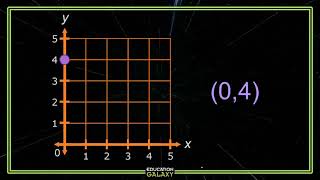
A 10 by 10 coordinate plane is a grid that extends ten units in each direction from the origin along both the x‑axis and the y‑axis. The plane therefore contains points whose x‑coordinates range from –5 to +5 and y‑coordinates from –5 to +5 when the origin is centered, or from 0 to 10 when the origin is placed at the lower‑left corner. This size is large enough to accommodate a variety of educational activities while still fitting comfortably on a standard sheet of graph paper or a digital screen.
Why the 10 by 10 Size Is Commonly Used
Many introductory lessons choose a 10 by 10 grid because it offers a clear visual balance:
- It provides enough space to plot multiple points, lines, and simple shapes without crowding.
- The scale is easy to read; each major grid line often represents one unit, making counting straightforward.
- It aligns well with common worksheet templates and interactive applets that default to a 10‑unit range.
When the origin is centered, the plane displays four quadrants equally, which helps students see symmetry and understand how signs of coordinates change across quadrants. When the origin is placed at a corner, the grid mimics the first quadrant only, useful for early lessons that focus on positive coordinates.
Setting Up the Grid
To draw a 10 by 10 coordinate plane by hand:
- Draw two perpendicular lines that intersect at the origin.
- Mark equal intervals along each line; label them –5, –4, …, 0, …, 4, 5 (centered) or 0, 1, …, 10 (corner‑origin).
- Extend the markings to form a full grid of squares.
- Optionally, darken every fifth line to highlight the scale.
In digital environments, most graphing tools allow you to set the window dimensions directly: xmin = –5, xmax = 5, ymin = –5, ymax = 5 for a centered view, or xmin = 0, xmax = 10, ymin = 0, ymax