Why an Adding And Subtracting Fractions Anchor Chart Works
Teachers and parents often look for visual tools that keep fraction concepts clear and memorable. An Adding And Subtracting Fractions Anchor Chart provides a single‑page reference that students can glance at while solving problems. The chart combines step‑by‑step instructions, color‑coded visuals, and quick reminders, reducing the need to flip through textbooks or notes.
When students see the same layout every day, the process of finding a common denominator, rewriting fractions, and performing the final addition or subtraction becomes automatic. The anchor chart also supports language development because the steps are written in concise, student‑friendly language.
Core Components of an Effective Anchor Chart
1. Title and Purpose
Start with a bold header that reads Adding And Subtracting Fractions Anchor Chart. Below the title, include a short sentence such as “Use this guide to add or subtract fractions with unlike denominators.” This tells students exactly when to reach for the chart.
2. Visual Layout of Fractions
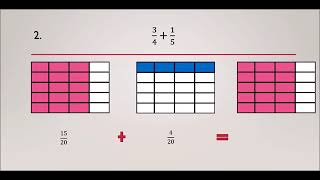
Draw two large fraction bars side by side. Label each bar with Numerator on the top and Denominator on the bottom. Use different colors for each fraction to help visual learners see the parts that need to match.
3. Step‑by‑Step Procedure
- Find a common denominator. List the least common multiple (LCM) of the two denominators.
- Rewrite each fraction. Convert the original fractions so they share the LCM.
- Add or subtract the numerators. Keep the common denominator unchanged.
- Simplify the result. Reduce the final fraction to its lowest terms.
Each step should have a short phrase and a tiny icon (e.g., a calculator for “Add/Subtract” and a scissors for “Simplify”).
4. Sample Problems
Include two quick examples—one for addition and one for subtraction. Write them in a box so students can trace the steps directly on the chart.
- Addition: 1/4 + 3/8 → 2/8 + 3/8 = 5/8
- Subtraction: 5/6 – 1/3 → 5/6 – 2/6 =