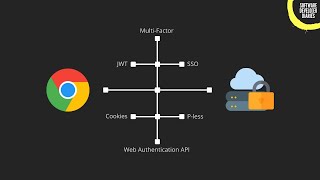
Understanding Auth in Modern Software Development
Authentication, often shortened to auth, is the first line of defense in any application that handles user data or sensitive operations. While the concept is simple—confirming who a user is—the implementation details can vary widely. In this article we’ll explore common auth patterns, highlight pitfalls developers face, and point you toward resources that can help you advance your career to a senior software engineer position with a job guarantee.
Session vs. Token‑Based Authentication
Two dominant auth models dominate today’s landscape: session‑based and token‑based. Understanding the differences is key to choosing the right approach for your project.
Session‑Based Auth
In a session‑based system, the server creates a session object after a user logs in and stores it in memory or a session store. The client receives a cookie containing the session ID, which it sends with each subsequent request. The server then looks up the session and verifies the user’s identity.
- Pros: Simple to implement, built‑in support in many web frameworks, automatically invalidated when the server restarts.
- Cons: Requires server‑side storage, not ideal for stateless architectures or microservices, vulnerable to session fixation if not handled properly.
Token‑Based Auth
Token‑based auth, such as JSON Web Tokens (JWT), stores the authentication data on the client side. After login, the server issues a signed token that the client includes in the Authorization header of each request.
- Pros: Stateless, scales easily across distributed systems, suitable for mobile and single‑page applications.
- Cons: Tokens cannot be revoked without a blacklist, larger payload can increase network overhead, requires careful handling of token expiration.
Choosing between them depends on your architecture, security requirements, and the nature of your user base.
Common Mistakes in API Authentication
Many developers still use Basic authentication for APIs. While Basic is straightforward—sending a Base64‑encoded username and password in the header—it is inherently insecure if not combined with TLS. Additionally, it exposes credentials on every request and offers no session management or token revocation.
Modern best practices recommend:
- Use token‑based auth: JWTs or opaque tokens issued by an identity provider.
- Secure transport: Enforce HTTPS for all API endpoints.
- Implement token rotation: Refresh tokens to minimize exposure.
- Leverage an identity platform: Platforms like Auth0 provide robust, scalable authentication flows out of the box.
Auth0, for instance, handles user federation, multi‑factor authentication, and fine‑grained access control, reducing the risk of implementing these features incorrectly.
Confusing APIs? Get Clarity with Auth Best Practices
When building an API, confusion often arises around where and how to validate auth tokens. A common pattern is