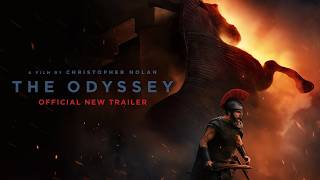
Christopher Nolan Film Odyssey: A Journey Through Modern Cinema
Christopher Nolan has become synonymous with ambitious storytelling, mind‑bending structures, and visual spectacle. From his early indie work to his blockbuster epics, Nolan’s filmography reads like a modern odyssey—each movie a new island of ideas, each sequel a continuation of a larger quest. This article maps the key milestones of the Christopher Nolan film odyssey, explores recurring themes, and highlights why audiences worldwide continue to follow his visionary path.
The Early Chapters: Breaking Into the Industry
Before the name “Inception” lit up theater marquees, Nolan was a student filmmaker in London. His first feature, Following (1998), was shot on a shoestring budget of £6,000. The film’s non‑linear narrative and tight editing signaled a director already obsessed with time and perspective. Critics praised the movie for its clever structure, and the success of Following earned Nolan a spot at the Sundance Film Festival, where he first caught the eye of Hollywood insiders.
The Rise of the Mind‑Bender: Memento and Insomnia
In 2000, Nolan released Memento, a thriller told in reverse chronology. The film earned two Academy Award nominations and cemented Nolan’s reputation as a master of narrative puzzles. The following year, he tackled a more conventional thriller with Insomnia, starring Al Pacino and Robin Williams. While less experimental, Insomnia demonstrated Nolan’s ability to blend strong character work with atmospheric tension.
Building a Blockbuster Empire: The Dark Knight Trilogy
Arguably the most defining segment of Nolan’s odyssey arrived with the Batman trilogy. Beginning with Batman Begins (2005), Nolan rebooted the caped crusader with a grounded, realistic tone. The Dark Knight (2008) elevated the series to new heights, earning an Academy Award for Best Supporting Actor (Heath Ledger) and becoming one of the highest‑grossing films of its era. The final installment, The Dark Knight Rises (2012), closed the arc while hinting at Nolan’s appetite for larger, more complex productions.
Exploring Time and Space: Inception and Interstellar
With Inception (2010), Nolan introduced the concept of shared dreaming as a heist narrative. The film’s intricate layers of reality, combined with a memorable score by Hans Zimmer, earned four Oscars and sparked endless discussion about its ending. Interstellar (2014) pushed the odyssey further, venturing into astrophysics and the limits of human endurance. Collaborating with physicist Kip Thorne, Nolan crafted a visually stunning depiction of wormholes and black holes, earning an Academy Award for Best Visual Effects.