Christopher Nolan Philosophy: Exploring Time, Identity, and Reality in Modern Cinema
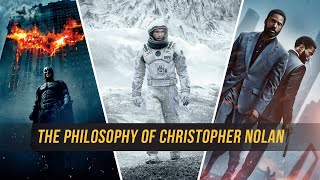
Christopher Nolan has become synonymous with cerebral storytelling. Over two decades, his films have invited audiences to question the nature of time, memory, and self‑perception. While many celebrate his visual flair, it is the underlying philosophy that distinguishes his oeuvre. This article examines the core ideas that recur in Nolan’s work, the intellectual influences that shape them, and why his approach continues to resonate with both critics and moviegoers.
Time as a Narrative Engine
One of the most evident philosophical concerns in Nolan’s catalogue is the malleability of time. In Inception, the layered dream architecture demonstrates how subjective experience can stretch or compress minutes into hours. Interstellar pushes this further, using relativistic physics to illustrate that love can transcend temporal distance, a notion that echoes the existential claim that relationships anchor us amidst a chaotic universe.
Films such as Memento and Dunkirk invert the conventional chronology, forcing viewers to reconstruct events from fragmented perspectives. This narrative technique mirrors the phenomenological view that consciousness is not a linear stream but a mosaic of moments pieced together by memory.
Identity and the Unreliable Self
Nolan frequently interrogates the stability of personal identity. The protagonist of Batman Begins wrestles with the mask he wears, while the titular character in The Prestige sacrifices his own humanity for artistic perfection. These stories echo the philosophical debate on whether the self is a fixed essence or a fluid construct shaped by choices and external expectations.
In Tenet, the concept of inversion—moving backward through time—creates a literal representation of an unreliable narrator. The audience is compelled to question what is real, what is illusion, and how much agency a character truly possesses when cause and effect are reversed.
Ethics, Power, and the Political Dimension
Although Nolan’s films are often marketed as high‑concept thrillers, they embed ethical dilemmas that reflect contemporary political concerns. The tension between security and freedom in Batman Begins parallels real‑world debates about surveillance. Similarly, the moral calculus in Interstellar—choosing between planetary survival and personal sacrifice—resonates with climate‑change discourse.
Critics have compared the narrative ambition of The Odyssey (a political movie of the decade) to Nolan’s scope, noting that both use epic storytelling to comment on societal structures. While Nolan does not overtly align with a political agenda, his films consistently ask what responsibility creators and leaders hold when wielding transformative power.
Influences from Philosophy and Science
Nolan’s background in literature and his fascination with scientific theory inform his storytelling. References