Introduction to Complex Sentences Using Conjunctions
Do you feel stuck in English? Do you want to communicate at a higher level? Mastering complex sentences using conjunctions is a crucial step in improving your English skills. In this article, we will explore the world of complex sentences, focusing on the role of conjunctions in creating clear and effective communication.
Conjunctions are words that connect words, phrases, or clauses in a sentence. They help to establish relationships between ideas, making it easier to express complex thoughts and ideas. By learning how to use conjunctions correctly, you can take your English skills to the next level and communicate more effectively.
Understanding Simple, Compound, and Complex Sentences
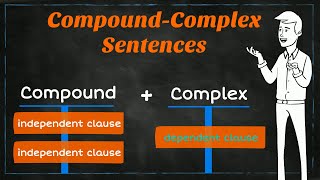
Before diving into complex sentences using conjunctions, it's essential to understand the basics of sentence structure. There are three main types of sentences: simple, compound, and complex. A simple sentence consists of a single independent clause, while a compound sentence contains two or more independent clauses joined by a conjunction. A complex sentence, on the other hand, contains an independent clause and one or more dependent clauses.
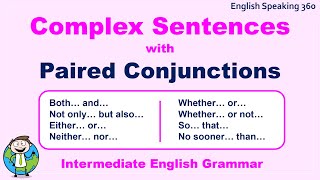
Learn how to identify simple, compound, and complex sentences, and you'll be well on your way to creating more sophisticated and effective sentences. PAIRED with a solid understanding of conjunctions, you'll be able to craft sentences that convey your ideas with clarity and precision.
The Role of Conjunctions in Complex Sentences
Conjunctions play a vital role in creating complex sentences. They help to connect independent and dependent clauses, establishing relationships between ideas and creating a clear flow of thought. There are several types of conjunctions, including coordinating conjunctions (such as and, but, and or) and subordinating conjunctions (such as because, although, and if).
Coordinating conjunctions connect independent clauses, while subordinating conjunctions connect dependent clauses to independent clauses. By using conjunctions correctly, you can create complex sentences that convey nuanced ideas and relationships.
Examples of Complex Sentences Using Conjunctions
Let's take a look at some examples of complex sentences using conjunctions. Consider the following sentence: "I went to the store because I needed to buy some milk." In this sentence, the subordinating conjunction because connects the dependent clause "I needed to buy some milk" to the independent clause "I went to the store."
Another example is: "I wanted to go to the beach, but it was raining." In this sentence, the coordinating conjunction but connects the two independent clauses "I wanted to go to the beach" and "it was raining."
- I went to the store because I needed to buy some milk.
- I wanted to go to the beach, but it was raining.
- I will attend the meeting unless I have a prior commitment.
Tips for Creating Complex Sentences Using Conjunctions
Creating complex sentences using conjunctions requires practice and patience. Here are some tips to help you get started:
- Start by identifying the relationships between ideas in your sentence. Do you want to show contrast, addition, or cause and effect?
- Choose the correct conjunction to connect your clauses. Coordinating conjunctions connect independent clauses, while subordinating conjunctions connect dependent clauses to independent clauses.
- Make sure your sentence is clear and concise. Avoid using too many conjunctions or clauses, as this can create confusion.
By following these tips and practicing regularly, you can master the art of creating complex sentences using conjunctions. Remember, the key is to use conjunctions correctly and to create clear relationships between ideas.