Understanding Compound Sentences: A Complete Guide
Compound sentences are an essential part of English grammar that allow writers to connect two or more independent clauses together. Before diving into practice exercises, it's important to understand what makes a sentence "compound." An independent clause is a group of words that can stand alone as a complete sentence, containing a subject and a verb that express a complete thought.
What Are Compound Sentences?
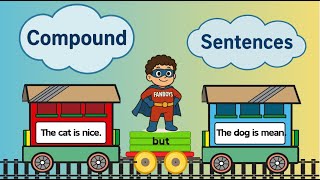
A compound sentence combines two independent clauses without creating a run-on sentence or fragment. These sentences are particularly useful when writers want to join two related but complete thoughts. For example, instead of writing two separate sentences, a writer might combine them using a comma and a FANBOYS conjunction.
The term "FANBOYS" refers to the seven coordinating conjunctions used to join compound sentences:
- for - shows reason
- and - adds information
- nor - adds negative information
- but - shows contrast
- or - offers alternatives
- so - shows result
- yet - shows contrast
Mastering Compound Sentence Structure
Learning how to write compound sentences correctly requires understanding the proper punctuation rules. As a general rule, commas should be used before the conjunction (FANBOYS) when joining two independent clauses in a compound sentence.
Consider this example: "I wanted to go to the movies, but it was too expensive."
In this sentence, both "I wanted to go to the movies" and "it was too expensive" are independent clauses. The comma before "but" separates the two complete thoughts, making the sentence clear and grammatically correct.
Practice Identifying Compound Sentences
Each question in your compound sentence worksheet will present a sentence or a scenario related to compound structures. To identify a compound sentence, look for these key elements:
- Two independent clauses that can stand alone as complete sentences
- A FANBOYS conjunction connecting the clauses
- A comma separating the clauses before the conjunction
Try identifying which of these sentences are compound sentences:
- She studied hard for the test.
- He went to the store and bought milk.
- I like pizza, but I prefer pasta.
- They played soccer until sunset.
- Weather permitting, we will go hiking tomorrow.
The first sentence is simply two complete sentences written separately. The second uses "and" but joins two parts of a single sentence with a subject and verb shared. The third is a compound sentence with proper comma usage. The fourth has a dependent clause at the beginning. The fifth uses a subordinating conjunction.
Compound Sentence Worksheet Practice
In today's lesson, you will practice the kinds of sentence combining skills that are essential for mastering compound sentences. These exercises will help you learn how to identify compound sentences and create your own.
Worksheet Exercise 1: Combining Sentences
Learn how to write compound sentences by combining these pairs of sentences. Remember to use a FANBOYS conjunction and proper comma placement:
- My friend called me. We need to meet.
- The homework was difficult. I finished it.
- The storm was approaching. We stayed inside.
- She is talented. She works hard.
- It was raining. We canceled the picnic.
Worksheet Exercise 2: Editing Practice
Learn how to identify compound- sentence errors in these examples. Some sentences need correction, while