Understanding the Congruent Triangles Foldable
When studying geometry, visual tools can make abstract concepts much clearer. The Congruent Triangles Foldable is one such resource, designed to help students identify and prove triangle congruence through hands‑on interaction. This article explains what the foldable is, why it matters, and how to use it effectively in a classroom or at home.
What Is a Congruent Triangles Foldable?
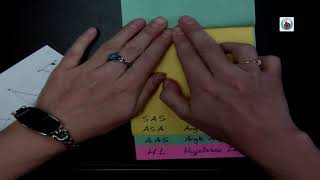
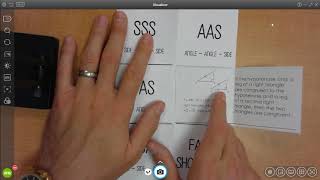
A foldable is a printable, paper‑based activity that can be folded into a compact booklet. The Congruent Triangles Foldable typically includes:
- Clear definitions of triangle congruence and the five standard postulates.
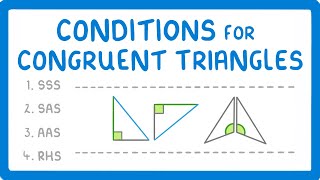
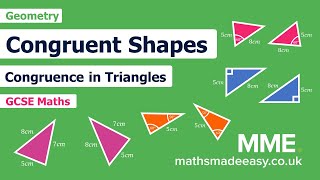
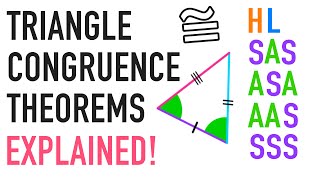
- Diagrams that illustrate each postulate – SSS, SAS, ASA, AAS, and HL (right‑triangle case).
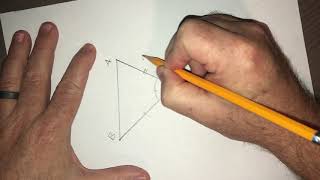
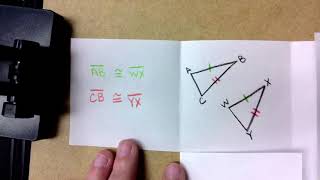
- Space for students to record the given information, draw corresponding triangles, and write step‑by‑step proofs.
- Check‑off sections that let learners verify whether each step follows the correct logical rule.
By folding the sheet, students create a mini‑reference guide that they can carry to the board, use during group work, or review before a test.
Why Use a Foldable for Congruent Triangles?
Research in mathematics education shows that active manipulation of materials improves retention and problem‑solving skills. The foldable meets several pedagogical goals:
- Concrete visualization – Students can see side lengths, angles, and relationships side by side.
- Organized thinking – The structured layout forces learners to list knowns, unknowns, and the reasoning behind each step.
- Self‑assessment – The built‑in checklist encourages students to ask, “Did I use a valid postulate?” before moving on.
- Portability – Unlike a large poster, the foldable fits in a binder or backpack.
Key Congruence Postulates Covered
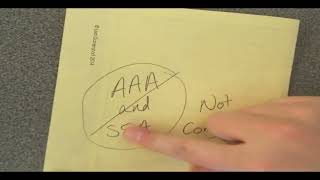
The foldable emphasizes the five postulates that guarantee two triangles are congruent. Understanding each rule helps avoid common misconceptions, such as assuming “angle‑angle‑angle” (AAA) proves congruence—a mistake often highlighted in the material.
Sides‑Side‑Side (SSS)
If three pairs of corresponding sides are equal, the triangles are congruent. The foldable provides a space to write the three side equalities and a simple diagram that aligns the sides.
Side‑Angle‑Side (SAS)
Two sides and the included angle must be equal. The activity prompts students to label the included angle clearly, preventing the error of using a non‑included angle.
Angle‑Side‑Angle (ASA)
Two angles and the included side are equal. The foldable includes a reminder that the side must lie between the two given angles.
Angle‑Angle‑Side (AAS)
Two angles and a non‑included side are equal. This postulate is often confused with ASA; the foldable’s side‑by‑side comparison helps differentiate them.