What Are Conjunctions and Why They Matter
Welcome to our easy and engaging English grammar lesson! Today, we're diving deep into the world of conjunctions, those incredibly useful word builders that help us create more interesting and varied sentences.
Conjunctions are special words that join together different parts of speech, thoughts, or ideas. Their primary function is to connect elements within a sentence, making our writing flow more smoothly and naturally. Without conjunctions, writing short sentences all the time can get pretty boring, leaving our prose choppy and difficult to read.
The Two Main Types of Conjunctions
Conjunctions come in two fundamental varieties: coordinating conjunctions and subordinating conjunctions. Understanding the difference between these types is crucial for constructing grammatically correct and stylistically effective sentences.
Coordinating Conjunctions: Equal Partners
Coordinating conjunctions join elements of equal grammatical weight. These word partners include:
- for - shows reason or explanation
- and - adds or connects ideas
- nor - negative connector
- but - shows contrast
- or - offers choices
- so - indicates result
- yet - expresses contrast
Remember these with the acronym FANBOYS. When using coordinating conjunctions, you don't need a comma before them if you're joining two independent clauses. However, placing a comma before the conjunction creates a slight pause for dramatic effect or clarity.
Subordinating Conjunctions: The Hierarchy
Subordinating conjunctions introduce dependent clauses that cannot stand alone as complete sentences. They establish a relationship between an independent and dependent clause, showing which idea supports or explains the other. Common subordinating conjunctions include:
- because - shows cause and effect
- although - introduces contrast
- since - indicates time or reason
- while - shows simultaneous action
- after - indicates sequence
- before - shows timing
- if - introduces condition
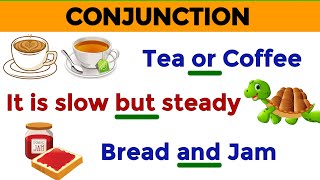
Visualizing Conjunctions with Examples
Let's explore how conjunctions work through practical examples that demonstrate their connecting power:
When you write "The sun is shining and the birds are singing," you're using a coordinating conjunction to join two complete thoughts that work together harmoniously. Both "The sun is shining" and "the birds are singing" could stand alone as sentences.
Contrast this with "The cake was delicious but it was too sweet." Here, the coordinating conjunction "but" introduces an unexpected twist to our expectation, creating interest through opposition.
Consider the sentence: "I stayed home because I was feeling sick." The subordinating conjunction "because" introduces a dependent clause that explains why you stayed home. Without "because," the sentence loses its reason and becomes incomplete.
Correlative Conjunctions: Paired Heroes
Some conjunctions work in pairs, known as correlative conjunctions. These dynamic duos include:
- both...and - emphasizes addition
- either...or - presents choices
- neither...nor - negative pairing