What Is the Distributive Property?
The distributive property is a fundamental rule in arithmetic and algebra that links multiplication with addition or subtraction. In its simplest form it states that for any numbers a, b, and c:
a × (b + c) = a × b + a × c
This relationship allows a single factor to be “distributed” across each term inside the parentheses. The property works equally well with subtraction: a × (b – c) = a × b – a × c. Understanding this rule is essential for simplifying expressions, solving equations, and performing mental math efficiently.
Visualizing the Distributive Property with Pictures
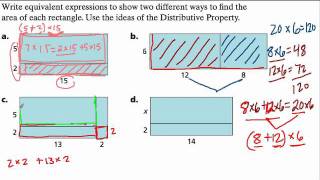
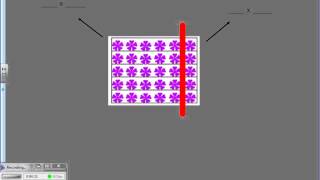
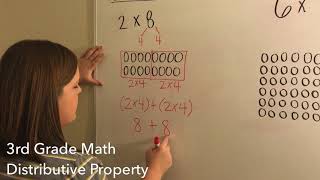
Concrete visual models make the abstract rule easier to grasp, especially for learners who benefit from seeing mathematics in action. A Distributive Property Picture typically shows a rectangle divided into smaller sections, each representing a partial product. The total area of the large rectangle equals the sum of the areas of the smaller rectangles, mirroring the algebraic statement.
Using Tiles to Demonstrate
Manipulatives such as square tiles or base‑ten blocks provide a hands‑on way to build the picture. To model 3 × (4 + 2):
- Create a group of three rows, each containing four tiles.
- Add a second group of three rows, each containing two tiles.
- Count the total tiles in the combined shape; the result is 18.
- Separate the count into 3 × 4 = 12 and 3 × 2 = 6, then add the partial products to verify the total.
This tile arrangement is a literal Distributive Property Picture that turns the symbolic equation into a tangible experience.
Arrays and Area Models
Another common picture uses an array or area model. Draw a rectangle whose length represents the factor outside the parentheses and whose width is split into two segments representing the addends inside. The rectangle’s total area equals the sum of the two sub‑rectangles’ areas. For example, a rectangle 5 units long and (3 + 4) units wide can be divided into a 5 × 3 region and a 5 × 4 region. The combined area (35) matches the sum of the partial areas (15 + 20).