Exterior Angle Theorem and Triangle Sum Theorem Task Cards
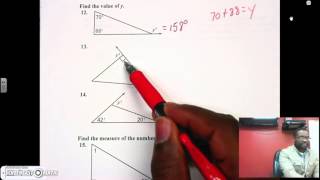
The Exterior Angle Theorem and the Triangle Sum Theorem are foundational concepts in middle‑school geometry. Teachers who want to reinforce these ideas often turn to task cards—portable, bite‑sized activities that promote independent practice and quick assessment. This article explains the two theorems, describes how to create effective task cards, and offers free resources, including a video tutorial, to help students master interior and exterior angle measures.
Understanding the Two Core Theorems
Triangle Sum Theorem
The Triangle Sum Theorem states that the interior angles of any triangle add up to 180°. This relationship holds for acute, right, obtuse, and even degenerate triangles. Proofs typically rely on parallel lines or on dividing a triangle into two right triangles.
- Key consequence: If two interior angles are known, the third can be found by subtracting their sum from 180°.
- Application: Solving real‑world problems such as determining the angle of a roof pitch or the turn angle in a navigation route.
Exterior Angle Theorem
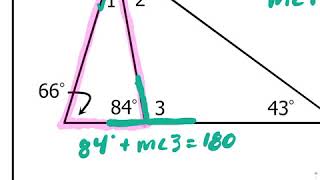
The Exterior Angle Theorem (also called the Exterior Angle Property) asserts that an exterior angle of a triangle is equal to the sum of the two non‑adjacent interior angles. In formula form:
Exterior angle = interior angle 1 + interior angle 2
This theorem follows directly from the Triangle Sum Theorem because the interior angles total 180°, and the exterior angle forms a linear pair with its adjacent interior angle.
- Key consequence: Knowing any two interior angles immediately gives the measure of the opposite exterior angle.
- Application: Determining missing angles in polygon exterior angle problems or checking the accuracy of drawn figures.
Why Use Task Cards for These Theorems?
Task cards provide a flexible, student‑centered way to practice the theorems repeatedly without monotony. They are especially useful for:
- Quick warm‑ups: A set of three to five cards can fill a 5‑minute bell‑ringer.
- Differentiated practice: Cards can be sorted by difficulty, allowing advanced learners to tackle multi‑step problems while others work on basic angle‑finding.
- Formative assessment: Teachers can collect cards for a fast check of understanding before moving on to more complex geometry topics.
- Collaborative learning: Small groups rotate through stations, discussing strategies and justifying answers.
Designing Effective Exterior Angle and Triangle Sum Task Cards
When creating task cards, follow these guidelines to keep them clear, engaging, and aligned with standards:
- Clear objective: State the target theorem on each card (e.g., “Use the Exterior Angle Theorem”).
- Visual support: Include a simple diagram