How Big Is the Republic of Congo?
The Republic of Congo, often called Congo‑Brazzaville to distinguish it from its larger neighbour, occupies a central position in the heart of Africa. Covering roughly 342,000 square kilometres (about 132,000 square miles), the country is comparable in size to the U.S. state of New Mexico. Its landmass stretches from the Atlantic coastline in the west to the dense rain‑forests of the Congo Basin in the east, offering a mix of low‑lying coastal plains, rolling savannas, and modest highlands.
Geographical Context and Borders
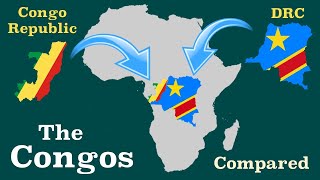
Understanding the Republic of Congo’s size is easier when you consider the nations that surround it. To the east lies the Democratic Republic of Congo (DRC), a country more than seven times larger, while to the south the Republic shares a border with Angola. Cameroon borders the north‑west, the Central African Republic lies to the north‑east, and Gabon borders the west. The Congo River, one of the world’s great waterways, forms a natural boundary with the DRC and creates a striking visual contrast: the capital city of Brazzaville sits directly opposite Kinshasa, the DRC’s capital, on opposite banks of the river.
Capital City: Brazzaville
Brazzaville is both the capital and the largest city of the Republic of Congo. With a population exceeding 1.8 million, it serves as the nation’s political, economic, and cultural hub. The city’s location on the north bank of the Congo River gives it a strategic advantage for trade and transport, linking inland resources to the Atlantic port of Pointe‑Noire. Brazzaville’s skyline blends colonial‑era architecture with modern developments, reflecting the country’s ongoing urban growth.
Population and Demographics
Approximately 5.5 million people call the Republic of Congo home. The population is ethnically diverse, comprising groups such as the Kongo, Teke, Mbochi, and Sangha peoples. French is the official language, a legacy of the country’s colonial past, while numerous indigenous languages thrive in daily life. Urbanisation is concentrated around Brazzaville and Pointe‑Noire, while the interior remains sparsely populated, dominated by forest and agricultural land.
Economic Landscape
The nation’s economy is heavily anchored in the oil sector. Oil production accounts for a large share of the gross domestic product (GDP) and government revenue, with most extraction occurring offshore and near the coastal city of Pointe‑Noire. Beyond oil, the Republic of Congo benefits from:
- Agriculture: Small‑scale farming of cassava, maize, and plantains supplies local markets.
- Forestry: The Congo Basin’s timber resources support both domestic use and export.
- Mining: Limited extraction of minerals such as iron ore and potash adds to the economic mix.
Efforts are underway to diversify the economy, encouraging investment in renewable energy, tourism, and manufacturing.
Climate and Natural Environment
The Republic of Congo enjoys a tropical climate, with two main seasons: a rainy season from March to November and a drier period from December to February. Average temperatures hover between 24 °C and 30 °C (75 °F‑86 °F) year‑round. The country’s extensive rainforests are part of the greater Congo Basin, home to a wealth of wildlife including forest elephants, gorillas, and the elusive okapi. These ecosystems not only support biodiversity but also play a crucial role in global carbon sequestration.
Transportation and Infrastructure
Transportation networks are centred around the capital and the coastal port:
- Roads: A network of paved highways links Brazzaville to Pointe‑Noire and to neighbouring countries, though many rural routes remain unpaved.
- Rail: The Congo‑Ocean Railway connects Brazzaville with Pointe‑Noire, facilitating the movement of goods, especially minerals and oil.
- Air travel: Maya‑Maya Airport in Brazzaville and Pointe‑Noire Airport provide regional and limited international flights.
- River transport: The Congo River remains a vital artery for both passenger and cargo traffic, especially between Brazzaville and Kinshasa.
Why Are There Two Congos?
The existence of two separate Congos stems from the colonial era. In the late 19th century, European powers divided the region along the Congo River. France established the French Congo, which later became the Republic of Congo, while Belgium claimed the eastern side, forming the Belgian Congo, now the Democratic Republic of Congo. After independence in 1960, both territories retained the name “Congo,” leading to the common practice of referring to them as Congo‑Brazzaville and Congo‑Kinshasa to avoid confusion.
Tourism and Cultural Highlights
Visitors to the Republic of Congo can experience a blend of natural beauty and cultural richness. Highlights include:
- Odzala‑Kokoua National Park: A premier wildlife sanctuary known for its gorilla tracking opportunities.
- Confluence of the Congo and Kouilou Rivers: Scenic riverine landscapes ideal for boat tours.
- Traditional music and dance: Vibrant performances showcase the rhythms of the Kongo and Teke peoples.
- Culinary delights: Local dishes such as moambe chicken and river fish stews offer a taste of Congolese flavour.
Key Facts at a Glance
- Capital: Brazzaville
- Area: ~342,000 km² (132,000 mi²)
- Population: ~5.5 million
- Official language: French
- Major industries: Oil, agriculture, forestry, mining
- Climate: Tropical, with a pronounced rainy season
In summary, the Republic of Congo may be modest in size compared with its neighbour, the Democratic Republic of Congo, but its 342,000 square kilometres host a rich tapestry of ecosystems, cultures, and economic activity. From the bustling streets of Brazzaville to the remote rainforests of Odzala‑Kokoua, the country offers a unique perspective on Central Africa’s geography and heritage.