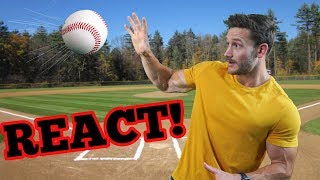
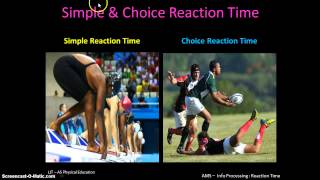
How To Improve Response Time in A Level Physical Education
Response time – the interval between a stimulus and the first observable movement – is a key performance indicator in many A Level PE activities, from sprint starts to team sport reactions. Improving this skill not only boosts scores in examinations but also enhances overall athletic ability. The following guide combines evidence‑based techniques, memory principles, and practical drills that align with the AQA AS PE curriculum.
Understanding the Components of Response Time
Response time can be broken down into three distinct phases:
- Stimulus detection: the sensory system recognises a visual, auditory or tactile cue.
- Decision processing: the brain evaluates the cue and selects an appropriate response, drawing on short‑term and procedural memory.
- Motor execution: the nervous system sends signals to the muscles, producing the movement.
Each phase offers opportunities for improvement. For example, training visual tracking can speed up stimulus detection, while operant conditioning techniques can refine decision processing.
Key Factors That Influence Response Time
Physical Factors
- Muscle fibre composition – a higher proportion of fast‑twitch fibres can generate quicker contractions.
- Neuromuscular coordination – efficient communication between nerves and muscles reduces delay.
- Fatigue – prolonged activity or insufficient recovery slows reaction speed.
Cognitive Factors
- Attention focus – selective attention improves stimulus detection.
- Memory systems – procedural memory (the “how” of a skill) and working memory (the “what now”) both affect decision speed.
- Stress levels – anxiety can lengthen the decision‑processing phase.
Training Methods Backed by the AQA AS PE Framework
Operant Conditioning Drills
The AQA AS syllabus highlights operant conditioning as a method for shaping behaviour. By using positive reinforcement (e.g., praise or points) when a learner responds correctly within a target time, the brain strengthens the neural pathways responsible for fast reactions.
Memory‑Based Practice
Memory research shows that varied practice enhances procedural memory more effectively than repetitive drills. Incorporate “randomised cue” sessions where the stimulus type (light, sound, or movement) changes unpredictably. This mirrors competition conditions and improves the brain’s ability to retrieve the appropriate response quickly.
Specific Skill Drills
- Start‑leads for sprinting: use a 4‑second “ready‑set‑go” countdown, then have athletes explode from a three‑point stance. Record the time from the auditory cue to the first foot‑strike.
- Ball‑catch reaction: project a ball from varying angles; athletes must catch or deflect it within 0.2 seconds