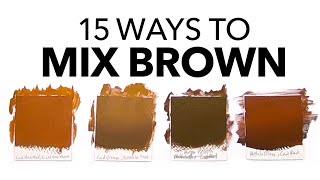
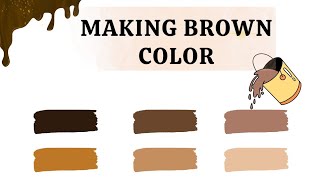
How To Make Brown Using Red: A Practical Guide for Artists
Creating rich, natural browns is a fundamental skill for any painter, illustrator, or digital artist. While many assume that brown is simply “black + yellow,” the truth is more nuanced. By strategically incorporating red into your mix, you can achieve warm, earthy tones that add depth to portraits, landscapes, and still‑life compositions. This article walks you through the theory, the step‑by‑step process, and pro tips that will help you master brown using red.
Understanding Basic Color Theory
Before you start mixing, it helps to recall the three‑primary colors—red, blue, and yellow—and how they combine to form secondary hues. Brown is essentially a desaturated orange or a muted version of red + green. When you add a touch of red to a yellow‑blue combination, the result shifts from a neutral gray toward a warm, earthy brown. The key is controlling saturation and value, not just the colors themselves.
The Role of Red in Brown Mixing
Red acts as a warm catalyst. A small amount of a pure, vivid red (such as cadmium or vermilion) can transform a dull, muddy brown into a vibrant, natural shade. Conversely, an overly strong red will push the mix toward a reddish‑brown or rust. Understanding the intensity of your red pigment and adjusting with complementary colors will keep the brown balanced.
Step‑By‑Step Guide: Making Brown Using Red
- Gather your primary colors. You’ll need a pure yellow (e.g., cadmium yellow), a pure blue (e.g., ultramarine), and a pure red (e.g., cadmium red).
- Mix a base orange. Combine equal parts yellow and red on your palette. Stir until the color is uniform.
- Add blue to mute the orange. Slowly introduce a tiny amount of blue—about a tenth of the orange’s volume. The mixture will darken and shift toward brown.
- Adjust with more red if needed. If the brown appears too cool or gray, add a very small dab of red. Blend thoroughly before adding more.
- Fine‑tune the value. For a lighter brown, mix in a touch of white or additional yellow. For a darker brown, add a bit more blue or a complementary green (created by mixing blue and yellow).
- Test on paper. Apply a swatch to a scrap piece of your working surface. Observe how the color behaves under different lighting and make final adjustments.
Tips for Consistent Results
- Use a limited palette. Sticking to three or four pigments reduces unexpected color shifts.
- Mix in small increments. Adding a little