How To Make Brown Watercolor: A Step‑by‑Step Guide for Beginners
Brown is one of the most versatile hues in a watercolor palette. It can convey warmth, earthiness, and depth in portraits, landscapes, and still‑life studies. Yet many beginners wonder how to create a reliable brown without buying a pre‑mixed tube. This article walks you through the fundamentals of mixing brown watercolor, offers practical recipes, and shares tips to keep your color consistent from one painting to the next.
Why Mixing Your Own Brown Matters
When you mix brown yourself you gain:
- Control over temperature – cool browns (with blues and greens) versus warm browns (with reds and yellows).
- Flexibility to shift hue for different lighting conditions.
- Cost efficiency by using a limited set of primary colors.
- Creative confidence that comes from understanding how pigments interact.
Basic Color Theory for Brown
Brown is essentially a desaturated orange, red, or yellow. In watercolor terms, it is created by mixing a primary color with its complementary hue and then adding a touch of black or a cool neutral to mute the result.
Complementary Pairs
These pairs cancel each other out and produce neutral tones:
- Red ↔ Green
- Blue ↔ Orange
- Yellow ↔ Purple
By adjusting the ratio of each color you can shift the brown from warm (more red or yellow) to cool (more blue or green).
Essential Materials
- Watercolor paints – a limited transparent staining palette works well. Recommended primary colors: Cadmium Red, Ultramarine Blue, Yellow Ochre, plus a small amount of Burnt Sienna or Payne’s Grey for depth.
- Palette or mixing tray.
- Clean water and a mixing brush.
- Paper towel for adjustments.
Step‑by‑Step Recipe for a Reliable Brown
Follow this simple formula and record the exact drops or scoops you use. This habit makes it easy to reproduce the same brown in future paintings.
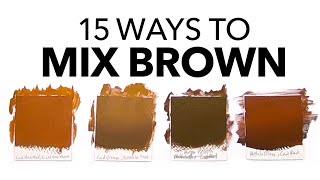
- Start with a warm base. Mix 2 parts Yellow Ochre with 1 part Cadmium Red. The result is a rich orange.
- Add the complement. Introduce 1 part Ultramarine Blue. The blue neutralizes the orange, shifting the hue toward brown.
- Darken gently. Add a tiny pinch of Payne’s Grey or a few drops