Understanding the Hundreds Chart Missing Numbers Activity
The Hundreds Chart Missing Numbers exercise is a proven tool for building number sense in early learners. By removing selected numerals from a 10 × 10 grid, teachers create a visual puzzle that encourages children to locate, count, and predict missing values. This simple yet powerful activity aligns with standards for first‑grade mathematics and can be adapted for both classroom and home environments.
Why a Hundreds Chart Works
A standard hundreds chart displays numbers 1 through 100 in ten rows of ten columns. The regular pattern helps children see relationships such as:
- Counting forward and backward by ones, tens, or fives
- Identifying place value (ones vs. tens)
- Spotting skip‑counting sequences (e.g., multiples of 2, 5, 10)
When numbers are removed, the chart becomes an interactive problem‑solving space. Students must rely on visual cues, mental math, and logical reasoning to fill the gaps, reinforcing the concepts listed above.
What Is a “Missing Numbers” Chart?
In a Hundreds Chart Missing Numbers worksheet, the teacher or parent blanks out a set of cells—often 5 % to 15 % of the total. The missing cells can be chosen at random or follow a pattern (e.g., every third number). The learner’s task is to:
- Identify each blank space on the chart.
- Write the correct numeral in the empty cell.
- Explain how they reached the answer (counting up, counting down, or using a known multiple).
This process strengthens both procedural fluency and conceptual understanding.
Step‑By‑Step Guide for Teachers
1. Prepare the Chart
Print a 10 × 10 grid from a free resource such as MightyOwl or create one in a word processor. Use a marker to erase numbers in the desired pattern. For a quick start, remove every 7th number; the result is a chart with 14 missing entries.
2. Introduce the Activity
Begin with a short video demonstration. Kids love 7 Minute Whiteboard Videos because they are fun and engaging. Show how to locate a missing number by counting forward from the previous known value or backward from the next known value. Emphasize that there is often more than one way to solve the puzzle.
3. Model a Solution
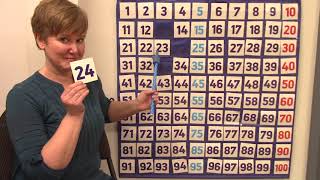
Choose one blank cell and think aloud: “The number before this spot is 23, and the number after is 25, so the missing number must be 24.” This modeling builds confidence and demonstrates the logical steps students will follow.
4. Guided Practice
Allow students to work in pairs, using sticky notes or a dry‑erase marker to fill in the blanks. Circulate the room, asking probing questions such as:

![What's the Missing Number [1-100 Version] (Can you figure out the MISSING number?)](https://i.ytimg.com/vi/BVR-j0Un-C4/mqdefault.jpg)