Is DRC and Congo the Same Country? Understanding the Differences
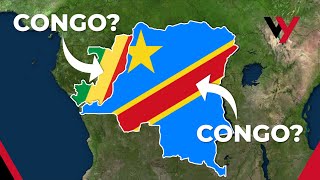
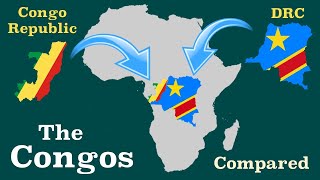
When you hear the names Democratic Republic of the Congo (DRC) and Republic of the Congo, it’s easy to assume they refer to the same nation. In reality, they are two distinct countries that share a border, a river, and a complex history. This article explains why the two Congos exist, highlights their political and geographic differences, and offers tips for distinguishing them in conversation and travel planning.
Historical Roots of the Two Congos
The confusion begins with colonial history. In the late 19th century, Belgium claimed the vast interior of Central Africa and named it the Belgian Congo. Meanwhile, France took control of the smaller territory to the west, calling it the French Congo. After independence in the 1960s, the Belgian colony became the Republic of the Congo (Leopoldville), later renamed the Democratic Republic of the Congo. The French colony became the Republic of the Congo (Brazzaville). Both nations kept “Congo” in their official titles, which is why the world now recognizes two separate Congos.
Geographic Overview
Both countries are located in Central Africa and are separated by the mighty Congo River. The river’s midpoint, the city of Kinshasa (DRC) and Brazzaville (Republic of the Congo), sit directly opposite each other across the water, making them the world’s closest capital cities.
- DRC covers roughly 2.34 million km², making it the second‑largest country in Africa.
- Republic of the Congo spans about 342 000 km², roughly one‑seventh the size of its neighbor.
- The DRC’s terrain includes dense rainforest, high plateaus, and the East African Rift, while the Republic of the Congo is dominated by coastal plains and lowland forest.
Political and Administrative Distinctions
Although both are republics, their governments operate independently:
- Capital Cities – The DRC’s capital is Kinshasa, while the Republic of the Congo’s capital is Brazzaville.
- Official Languages – French is official in both, but the DRC also recognizes Lingala, Swahili, Kikongo, and Tshiluba as national languages. The Republic of the Congo primarily uses French and Kituba.
- Political Systems – The DRC is a semi‑presidential republic with a history of civil conflict and multiple power transitions since independence. The Republic of the Congo is a presidential republic with a comparatively stable, though still evolving, political landscape.
Why Do People Mix Them Up?
The similarity in names is the primary source of confusion, but other factors contribute:
- Media Coverage – International news often shortens “Democratic