Label a Wave Diagram: A Quick Guide for GCSE Students
Understanding wave diagrams is a key part of the physics curriculum. Whether you’re studying transverse or longitudinal waves, the ability to label each element accurately will help you answer exam questions confidently. This article breaks down the main features of a wave diagram and shows you how to label them quickly using a few simple steps.
Why Accurate Labeling Matters
In GCSE physics, examiners expect you to identify:
- Amplitude – the maximum displacement from the rest position.
- Wavelength – the distance between successive crests or troughs.
- Period – the time taken for one complete oscillation.
- Frequency – the number of oscillations per second.
- Phase – the relative position of a wave compared to a reference point.
Accurate labeling demonstrates that you understand how these properties relate to the physical behaviour of waves.
Step‑by‑Step: How to Label a Wave Diagram
- Identify the Wave Type
Transverse waves have particle motion perpendicular to the direction of travel, while longitudinal waves have motion parallel to the direction of travel. Look for arrows on the diagram: vertical arrows indicate transverse motion; horizontal arrows indicate longitudinal motion. - Mark the Rest Position
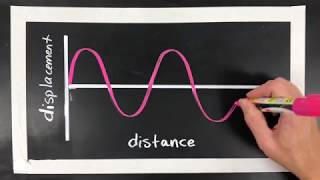
Draw a horizontal line that represents the equilibrium position of the medium. All other points on the diagram will be measured relative to this line. - Label Amplitude
Measure the distance from the rest position to the highest crest (or deepest trough). Write “Amplitude = A” above or beside this measurement. - Mark Wavelength
Find two successive crests (or troughs) and measure the distance between them. Label this distance “λ” (lambda). - Determine Period and Frequency
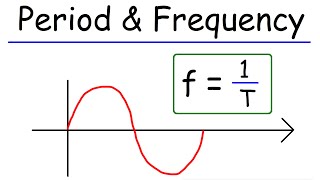
If a time axis is included, note the time between two identical points on the wave. That is the period (T). Frequency (f) is simply 1/T. Write these values in the appropriate units (seconds and hertz). - Add Phase Information
If the diagram shows more than one wave, indicate the phase shift using the symbol Δϕ. A phase difference of 180° (π radians) means the waves are out of phase.
Using Video Resources to Master Wave Labels
A visual approach can speed up learning. For instance, this interactive module on BrainGenie offers a hands‑on way to practice labeling. Additionally, the GCSE