What Is the “Math Market” and Why It Matters
The term Math Market describes the growing ecosystem where mathematical theory meets real‑world trading. From academic research papers to daily price quotes, quantitative methods shape how investors price assets, manage risk, and discover new opportunities. Understanding this convergence helps anyone from a retail trader to a seasoned portfolio manager stay competitive in a data‑driven world.
Core Components of the Math Market
1. Pricing Models and Derivatives
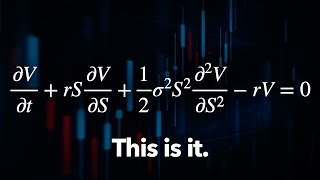
One of the most celebrated achievements in the Math Market is the Black‑Scholes/Merton equation. First published in 1973, it provides a closed‑form solution for pricing European‑style options. The model uses five inputs—underlying price, strike price, time to expiration, risk‑free rate, and volatility—to calculate a fair value. While the formula has limitations (e.g., it assumes constant volatility), it remains a foundation for modern derivatives pricing and risk management.
2. Algorithmic and High‑Frequency Trading
Algorithmic trading translates statistical signals into automated order execution. Strategies such as statistical arbitrage, momentum, and mean‑reversion rely on mathematical models that process thousands of data points per second. The rapid growth of this sub‑field has spurred demand for programming skills, data science, and robust infrastructure.
3. Quantitative Risk Management
Risk models, including Value‑at‑Risk (VaR) and Conditional VaR, use probability theory to estimate potential losses. By simulating thousands of market scenarios, firms can set capital reserves, adjust leverage, and comply with regulatory standards. These tools are essential for both banks and hedge funds operating in volatile markets.
Key Markets Influenced by Math
- Equities – Factor models (e.g., Fama‑French) decompose stock returns into market, size, and value components.
- Commodities – Pricing models for gold, silver, platinum, oil, natural gas, and uranium incorporate supply‑demand dynamics, storage costs, and convenience yields.
- Fixed Income – Yield curve construction and credit risk modeling rely on stochastic differential equations.
- Cryptocurrencies – Volatility forecasting and on‑chain analytics use advanced time‑series methods.
How to Get Started in the Math Market
- Learn the Fundamentals – Study calculus, linear algebra, probability, and statistics. Free resources such as university OpenCourseWare or MOOCs provide a solid base.
- Master a Programming Language – Python, R, and MATLAB dominate quantitative research. Libraries like pandas, NumPy, and QuantLib simplify data handling and model implementation.
- Practice with