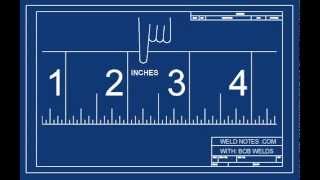
Measurement Ruler Worksheet: A Practical Guide for Students and Educators
Understanding how to measure length accurately is a foundational skill in elementary math. A measurement ruler worksheet provides a hands‑on way for learners to practice reading and using rulers, converting units, and applying fractions. This article offers a step‑by‑step tutorial, highlights key concepts, and points to free resources that can be downloaded to enhance classroom or home learning.
Why Ruler Worksheets Matter in the Classroom
Rulers are more than just tools; they are visual aids that help students grasp the relationship between numbers and real‑world dimensions. By working through a structured worksheet, students:
- Develop fine motor skills as they mark and read measurements.
- Learn to interpret fractional divisions—such as 1/2, 1/4, and 1/8—on a standard 12‑inch or 30‑cm ruler.
- Apply metric concepts like centimeters and meters, which are essential for science and engineering topics.
- Build confidence in reading and writing measurement data accurately.
Types of Measurement Ruler Worksheets
Effective worksheets vary by difficulty, content focus, and student age. Here are three common formats:
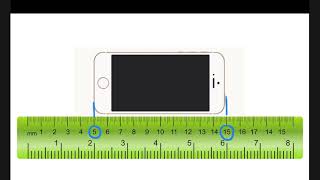
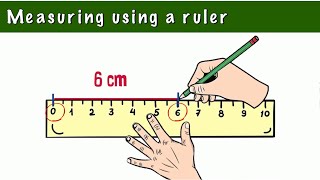
- Basic Length Identification – Students locate a given length on a ruler and write the measurement in inches or centimeters.
- Fractional Measurement – Learners practice reading half‑inch, quarter‑inch, or eighth‑inch marks, often matching them to a diagram or real‑world item.
- Metric Conversion – Worksheets that ask students to convert centimeters to meters or vice versa, reinforcing the 100‑centimeter rule.
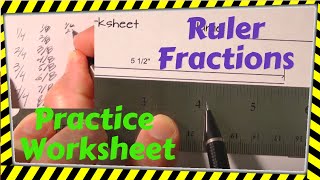
How to Read Fractions on a Ruler
Many students find fractional marks confusing at first. Here’s a clear approach that can be turned into a worksheet activity:
- Identify the base unit: On an inch ruler, the full inch marks are spaced one inch apart. On a centimeter ruler, each full centimeter mark is spaced one centimeter apart.
- Locate the fraction marks: Between each full unit, there are smaller divisions. For inches, the 1/2 mark sits halfway between two full inches. The 1/4 marks lie at one‑quarter and three‑quarters of the way.
- Read the value: If a line falls exactly on a 1/4 mark, write “1/4 inch.” If it falls between two fractional marks, estimate the nearest fraction or convert to a decimal.
- Practice with real objects: Use a pencil or a piece of paper to mark the length on a ruler, then write the measurement. This tactile method reinforces the visual learning.
To help students master this skill, provide a worksheet that includes a set of objects (e.g