Understanding the 2015 Iran Nuclear Deal
The Joint Comprehensive Plan of Action (JCPOA), commonly referred to as the 2015 Iran Nuclear Deal, stands as one of the most significant diplomatic achievements of the Obama administration. Signed on July 14, 2015, the agreement was the culmination of years of intense multilateral negotiations between Iran and the P5+1—the United States, the United Kingdom, France, Russia, China, and Germany—along with the European Union.
The primary objective of the deal was to prevent Iran from developing a nuclear weapon by imposing strict limitations on its nuclear program. In exchange, the international community agreed to provide relief from crippling economic sanctions that had isolated Iran from the global financial system.
The Mechanics of the JCPOA
The agreement was technically complex, designed to ensure that Iran’s "breakout time"—the amount of time needed to produce enough fissile material for a single nuclear weapon—was extended from a few months to at least one year. Key provisions included:
- Uranium Enrichment Limits: Iran agreed to reduce its stockpile of enriched uranium and limit the number and type of centrifuges used for enrichment for a period of 10 to 15 years.
- Plutonium Restrictions: The Arak heavy-water reactor was redesigned to prevent the production of weapons-grade plutonium.
- Enhanced Monitoring: The International Atomic Energy Agency (IAEA) was granted unprecedented access to verify Iran’s compliance, including inspections of nuclear facilities and supply chains.
- Sanctions Relief: Upon verification by the IAEA that Iran had met its initial commitments, the United States, the EU, and the United Nations began lifting nuclear-related economic sanctions.
The Obama Administration’s Rationale
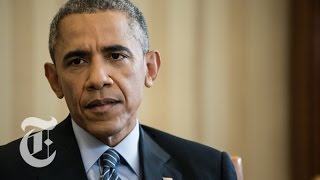
President Barack Obama frequently defended the deal as the most viable path to regional and global security. During his tenure, he engaged in various public forums to explain the administration's position. In an exclusive interview with Thomas L. Friedman, the president emphasized that he had no second thoughts about the agreement, arguing that the alternative—military conflict or a nuclear-armed Iran—would have been far more dangerous for the United States and its allies.
The administration faced significant domestic opposition, prompting intense lobbying efforts. Vice President Joe Biden played a crucial role, meeting with Senate Democrats to secure support for the deal, which faced a skeptical Congress. Throughout the process, the president maintained that the JCPOA was not based on trust, but on strict verification measures.
Public Discourse and Media Coverage
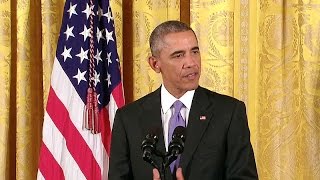
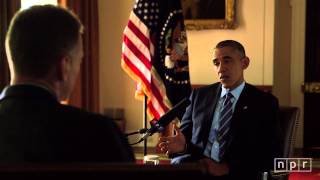
The debate surrounding the deal permeated all levels of American media. The administration utilized various platforms to communicate the necessity of the agreement. For instance, in a discussion with NPR’s Steve Inskeep, President Obama addressed the technical aspects and the strategic necessity of the diplomacy. The deal also became a subject of cultural conversation; archival footage from July 14, 2015, shows the immediate global reaction to the announcement, and the topic even reached late-night television, with the president discussing the implications of the agreement during appearances on shows like Stephen Colbert’s.
Challenges and Legacy
Despite its implementation, the JCPOA remained a point of deep political contention. Critics argued that the deal did not sufficiently address Iran’s ballistic missile program or its regional influence through proxy groups. Furthermore, the sunset clauses—provisions that would expire after a set number of years—drew sharp criticism from those who believed the deal only delayed, rather than permanently ended, Iran's nuclear ambitions.
The agreement underwent a major shift in 2018 when the Trump administration announced the United States' withdrawal from the JCPOA, reimposing sanctions on Iran. This move led Iran to gradually step back from its own commitments, increasing its enrichment levels and restricting IAEA access. Consequently, the status of the agreement has been the subject of ongoing diplomatic efforts in subsequent years, highlighting the fragility of international non-proliferation treaties in the face of shifting domestic political priorities.
Conclusion
The 2015 Iran




![President Holds a Press Conference on the Nuclear Deal with Iran MC Tape 6726 [FOIA # 22-51429-F.2]](https://i.ytimg.com/vi/A-xwz6_Q2jY/mqdefault.jpg)

