Understanding the Parts of an Atom: A Complete Worksheet Guide
The atom is the fundamental unit of matter, and mastering its components is essential for success in chemistry and physics. This article provides a clear, step‑by‑step explanation of each part of an atom, offers a printable worksheet format, and highlights resources from the Clark College Tutoring and Writing Center.
Learn the Basics of the Atom
Every atom is made up of three primary particles. Knowing where each particle lives and what charge it carries helps you visualize how atoms interact, form bonds, and create the world around us.
Protons
Charge: Positive
Location: Nucleus (the dense center of the atom)
The number of protons defines the element. For example, carbon always has six protons, while oxygen always has eight. This count is called the atomic number.
Neutrons
Charge: None (neutral)
Location: Nucleus
Neutrons add mass but do not affect the element’s chemical identity. Varying the number of neutrons creates isotopes, which are atoms of the same element with different masses.
Electrons
Charge: Negative
Location: Energy levels (or shells) surrounding the nucleus
Electrons determine an atom’s chemical behavior. In a neutral atom, the number of electrons equals the number of protons. Electrons occupy specific shells, each with a maximum capacity (2, 8, 18, etc.).
Parts of an Atom Worksheet
Below is a simple worksheet format that can be printed or completed digitally. It reinforces the three main parts and their characteristics.
- Identify the particle. Write “Proton,” “Neutron,” or “Electron.”
- State the charge. Positive, negative, or none.
- Locate the particle. Nucleus or energy level/shell.
Example entry:
- Particle: Proton
- Charge: Positive
- Location: Nucleus
Students can repeat the list for neutrons and electrons, then compare the three entries to see the clear differences.
How Do We Represent an Atom?
There are two common symbolic methods used in classrooms and textbooks.
- Atomic notation: The element’s symbol is written with the atomic number (protons) as a subscript and the mass number (protons + neutrons) as a superscript. For carbon‑12, the notation is ₆¹²C.
- Electron configuration: This shows how electrons fill the shells, using numbers and letters (e.g., 1s² 2s² 2p⁶ for neon).
Both notations help students visualize the internal structure and predict how atoms will bond.
Atomic Basics Worksheet Starter
Use the following short quiz to test basic knowledge before moving on to more detailed problems.
- What is the smallest unit of matter that retains the properties of an element?
Answer: Atom - Which particle carries a positive charge?
Answer: Proton - Where are neutrons located?
Answer: In the nucleus - How many electrons does a neutral sodium atom have?
Answer: 11 (same as its 11 protons)
These questions can be expanded into fill‑in‑the‑blank or matching activities for classroom use.
Clark College Tutoring and Writing Center Support
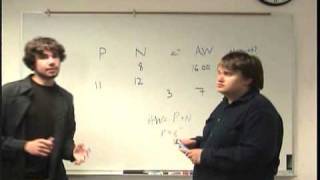
Clark College’s Tutoring and Writing Center offers targeted help for students struggling with atomic concepts. Tutors Kevin Martin and Joey Smokey have created a series of short videos that break down each particle, illustrate how to draw atomic diagrams, and connect the ideas to electricity.
Key features of their program include:
- Step‑by‑step visual explanations of protons, neutrons, and electrons.
- Interactive worksheets that can be completed during tutoring sessions.
- Connections between atomic structure and electrical charge, preparing students for later topics such as circuits and magnetism.
Students can access these resources through the college’s online portal or schedule a one‑on‑one session for personalized guidance.
Conclusion
Mastering the parts of an atom lays the groundwork for all future chemistry and physics learning. By using a clear worksheet, practicing atomic notation, and taking advantage of tutoring resources, students can confidently move from basic identification to more complex topics like bonding and electricity.
Additional Resources
- Clark College Tutoring and Writing Center – www.clark.edu/tutoring
- Khan Academy – Atomic structure lessons – www.khanacademy.org/science/chemistry/atomic-structure-and-properties
- OpenStax Chemistry – Chapter on atomic theory – openstax.org/books/chemistry-2e/pages/1-introduction