Patterns For Preschoolers: Building Early Math Skills Through Play
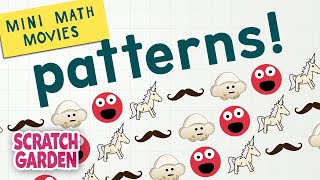
Introducing patterns for preschoolers is one of the most effective ways to lay a solid foundation for later math learning. When children recognize and extend repeating sequences, they develop critical thinking, problem‑solving, and language skills that support every subject area. This article explains why patterns matter, how to teach them in everyday moments, and offers practical activities that keep little learners engaged.
Why Patterns Matter in Early Childhood
Patterns are everywhere—from the stripes on a zebra to the beats in a song. By noticing these regularities, preschoolers begin to understand the concept of order and predictability. In this elementary math lesson, teachers and parents can use simple visual and auditory cues to help children:
- Identify similarities and differences.
- Predict what comes next in a sequence.
- Develop memory and concentration.
- Connect math ideas to real‑world experiences.
Research shows that early exposure to patterns supports later success in algebraic thinking. The skill of extending a pattern is essentially a first step toward solving equations.
Let’s Learn About Visual Patterns
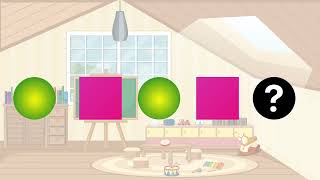
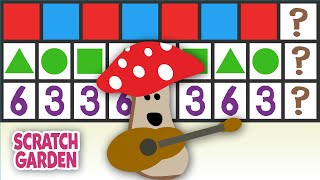
Visual patterns are the easiest entry point for most preschoolers. Use everyday objects such as blocks, beads, or stickers to create AB, AAB, or ABC sequences. For example, line up a red block, a blue block, and repeat. Ask the child, “What comes after the blue block?” This simple question encourages them to learn the rule governing the pattern.
Here are three quick visual‑pattern activities:
- Color‑Sorting Row: Lay out a row of colored pom‑poms in a red‑yellow‑red‑yellow pattern. Let the child add the next two pieces.
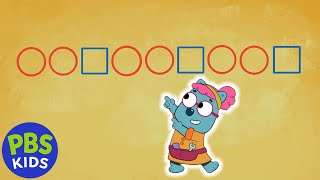
- Shape‑Match Chain: Use cut‑out shapes (circle, square, circle, square) and ask the child to finish the chain with two more shapes.
- Sticker Sequence: Provide a sheet of animal stickers. Create a pattern of “cat, dog, cat, dog” and let the child continue.
When you finish an activity, say, “Great job! You just extended the pattern.” Positive reinforcement builds confidence and encourages repeat attempts.
Let’s Sing and Repeat: Auditory Patterns
Preschoolers love music, and rhythm provides a natural framework for pattern practice. Let’s sing and repeat a short chant such as “Clap, stomp, clap, stomp.” After a few rounds, pause and ask the child to fill in the missing action. This reinforces the idea that patterns can be heard as