Introduction
Assalamu alaikum. This is Mohammed, your math HR from KKI Schools. Today we’re diving into a topic that often trips students up: percents greater than 100. Whether you’re tackling a worksheet or preparing for a test, understanding how percentages over 100 work is essential. In this article, we’ll break down the concept, show step‑by‑step solutions, and provide practice examples to help you master the skill.
Why Study Percents Greater Than 100?
Percentages are usually associated with parts of a whole, so the idea of a percentage exceeding 100 can feel counterintuitive. However, real‑world situations—such as profit margins, population growth, or interest rates—frequently involve values above 100. Mastering these concepts not only boosts your math confidence but also prepares you for advanced topics in algebra and statistics.
Understanding the Concept
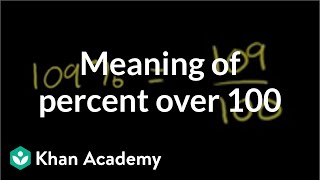
When we say “percent,” we’re referring to a ratio out of 100. A value of 150% means 150 parts out of 100, which is the same as 1.5 times the whole. In other words, 150% is equivalent to 1.5 in decimal form. This relationship is key to solving any problem involving percentages over 100.
How to Solve Percents Greater Than 100
- Identify the given percentage. For example, 120%.
- Convert to a decimal. Divide by 100: 120 ÷ 100 = 1.20.
- Apply the decimal to the base value. If the base is 200, multiply: 200 × 1.20 = 240.
- Interpret the result. The answer (240) represents a 20% increase over the original value (200).
When solving worksheets, remember the teacher’s advice: “Any number front of the decision of the percentage is the key.” This means always start with the base number before applying the percent.
Percent Less Than 1 or Greater Than 100
Percentages can also be less than 1% or greater than 100%. The same steps apply:
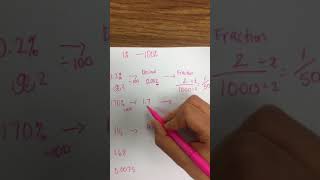
- Less than 1%: 0.5% becomes 0.005 in decimal.
- Greater than 100%: 250% becomes 2.5 in decimal