Understanding Play Cards Probability
Probability is the mathematical language that describes the chance of an event occurring. When it comes to playing cards, probability helps us answer questions such as “What is the likelihood of drawing an ace?” or “How many different ways can a deck be shuffled?” By mastering these concepts, players can make more informed decisions in games ranging from poker to bridge.
Basic Concepts: Sample Space and Events
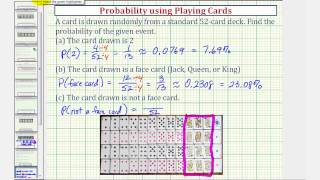
In a standard deck there are 52 cards divided into four suits (hearts, diamonds, clubs, spades) and thirteen ranks (2 through 10, jack, queen, king, ace). The sample space is the set of all possible outcomes – in this case, the 52 individual cards. An event is any subset of that space, such as “drawing a heart” or “getting a face card.” The probability of an event is calculated as:
P(event) = (number of favorable outcomes) ÷ (total number of possible outcomes)
For example, the chance of drawing any heart is 13 ÷ 52 = ¼ or 25%.
Compound Probabilities: Drawing Multiple Cards
When more than one card is drawn, the calculations become compound. If the cards are drawn without replacement, the probability changes after each draw because the sample space shrinks.
Consider the probability of drawing two aces in a row:
- First draw: 4 aces out of 52 cards → 4/52.
- Second draw: 3 remaining aces out of 51 cards → 3/51.
The combined probability is (4/52) × (3/51) ≈ 0.0045, or about 0.45%.
Permutations and the Size of a Deck
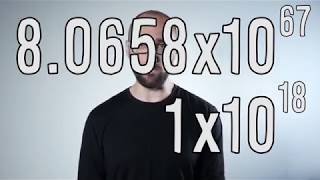
One of the most striking facts about playing cards is the astronomical number of possible arrangements. The total number of ways to order a full deck is 52 factorial (52!). This equals about 8.07 × 10⁶⁷ different shuffles – a number so large that even if every person on Earth shuffled a deck once per second, it would take billions of years to exhaust all possibilities.
Stanford professor Persi Diaconis, a leading expert on card shuffling, has shown that a well‑executed riffle shuffle randomizes a deck after about seven repetitions. His research, often featured in popular science videos, illustrates how probability theory underpins everyday gaming practices.
Practical Applications in Popular Games
- Poker: Calculating the odds of a flush, straight, or full house helps players assess risk and decide whether to bet, call, or fold.
- Blackjack: Knowing the probability of busting with a given hand guides the optimal “hit” or “stand” strategy.
- Bridge: Partners use probability to infer the distribution of unseen cards based on the bidding sequence.
![Probability of 52 Playing Cards [No Ads]](https://i.ytimg.com/vi/7Nskr5CtVyc/mqdefault.jpg)