Understanding Positive and Negative Numbers on a Number Line
A number line is a visual representation of numbers on a line, making it easier to understand the relationship between different numbers. It is a fundamental concept in mathematics, and understanding how to work with positive and negative numbers on a number line is crucial for various mathematical operations. In this article, we will delve into the world of positive and negative numbers on a number line, exploring how they work and how to apply this knowledge in different mathematical contexts.
What are Positive and Negative Numbers?
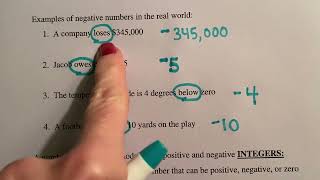
Positive numbers are numbers greater than zero, and they are represented on the right side of the number line. On the other hand, negative numbers are numbers less than zero, and they are represented on the left side of the number line. The number zero is the reference point, separating positive numbers from negative numbers. Understanding the concept of positive and negative numbers is essential for performing various mathematical operations, such as addition and subtraction.
The Number Line
A standard number line has numbers marked at regular intervals, with zero at the center. The numbers to the right of zero are positive, and the numbers to the left of zero are negative. The farther a number is from zero, the greater its absolute value. For example, the number 5 is farther from zero than the number 3, so it has a greater absolute value. The number line is a powerful tool for visualizing the relationship between different numbers and for performing mathematical operations.
Plotting Positive and Negative Numbers on a Number Line
Plotting numbers on a number line is a straightforward process. To plot a positive number, move to the right of zero by the corresponding number of units. For example, to plot the number 4, move 4 units to the right of zero. To plot a negative number, move to the left of zero by the corresponding number of units. For example, to plot the number -3, move 3 units to the left of zero. This visual representation makes it easier to understand the relationship between different numbers and to perform mathematical operations.
Adding Integers Using a Number Line
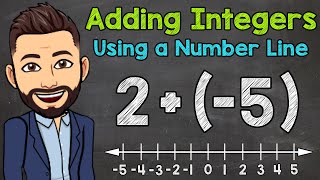
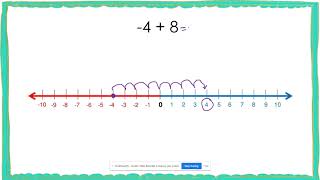
A number line can be used to help with adding integers. When adding two numbers, start at the first number and move to the right by the corresponding number of units for a positive number or to the left for a negative number. For example, to add 2 and 3, start at 2 and move 3 units to the right, landing on 5. To add -2 and 3, start at -2 and move 3 units to the right, landing on 1. Using a number line to add integers can help build a deeper understanding of the underlying mathematical concepts.
Subtracting Integers Using a Number Line
A number line can also be used to help with subtracting integers. When subtracting two numbers, start at the first number and move to the left by the corresponding number of units for a positive number or to the right for a negative number. For example, to subtract 3 from 5, start at 5 and move 3 units to the left, landing on 2. To subtract -2 from 3, start at 3 and move 2 units to the right, landing on 5. Using a number line to subtract integers can help build a deeper understanding of the underlying mathematical concepts.
Learning Resources
There are many resources available to help learn about positive and negative numbers on a number line. Visit https://vividmath.com for free lessons on various mathematical topics, including adding and subtracting integers. You can also learn more about adding and subtracting integers by watching video lessons on websites such as https://www.patreon.com/homeschoolpop and http://www.mathantics.com. These resources can provide a more in-depth understanding of the concepts and help build a strong foundation in mathematics.
Conclusion
Understanding positive and negative numbers