Preposition Pictures: Visualizing Language for Easy Learning
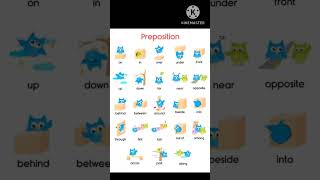
Prepositions are the glue that connects nouns, pronouns, and phrases to the rest of a sentence. Words such as in, on, under, between, next to, and in front of tell us where something is located or how it relates to something else. For beginners and kids, learning these abstract words can be challenging. Preposition pictures provide a concrete way to see and understand these spatial relationships, turning grammar into a visual and engaging experience.
Why Visuals Matter in Preposition Learning
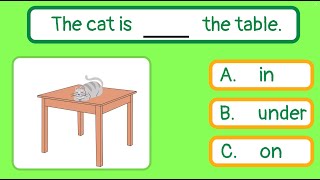
Children often grasp concepts better when they can see them. A picture that shows a ball under a table, a cat next to a tree, or a book between two chairs instantly conveys the idea that the preposition is describing location. This visual approach reduces the cognitive load of memorizing rules and encourages intuitive understanding.
Research in educational psychology supports the use of imagery to reinforce memory. When learners associate a preposition with a clear visual cue, they create stronger neural connections, making recall faster and more reliable. In practice, this means that a child who sees a picture of a dog in front of a house is more likely to use “in front of” correctly in a sentence later.
Common Prepositions Covered by Picture Examples
Below is a list of the most frequently taught prepositions and how they can be illustrated:
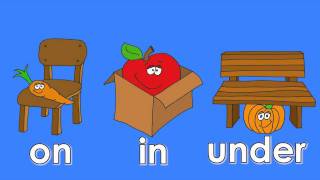
- In – a ball inside a box
- On – a cup on a table
- Under – a kitten under a blanket
- Next to – a pencil next to a notebook
- Between – a bridge between two cliffs
- In front of – a child in front of a classroom
These simple images can be turned into worksheets, flashcards, or interactive games that help children practice placing objects correctly.
Educational Video Resources for Kids
Videos that combine animated graphics with spoken explanations are a powerful tool for reinforcing preposition usage. One popular series, Prepositions Made Easy with Pictures Ep_534, walks children through each preposition with clear visuals and examples. The video format allows learners to see the action, hear the word, and repeat the phrase in a natural rhythm.
For educators, a short video can be a great addition to a lesson plan. You might pause after each preposition to ask students to point to the correct picture on a screen or to draw their own representation. This active participation keeps attention high and helps solidify the concept.