Republic of Congo and DRC: A Clear Comparison of Two Neighboring Nations
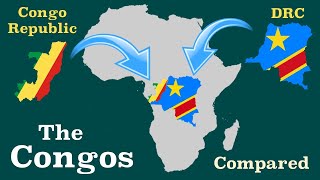
The central African region is home to two distinct countries that often cause confusion: the Republic of Congo (commonly called Congo‑Brazzaville) and the Democratic Republic of the Congo (Congo‑Kinshasa). Though they share a name and a border, their histories, politics, economies, and cultures differ dramatically. This article outlines the most important facts to help readers understand why there are two Congos and what sets them apart.
Geography and Demographics
- Republic of Congo – 342,000 km²; capital Brazzaville; population ~5.5 million.
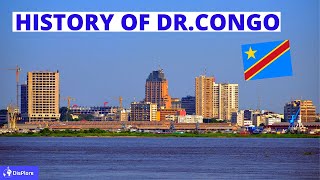
- Democratic Republic of the Congo (DRC) – 2.34 million km²; capital Kinshasa; population ~105 million.
Both capitals sit on opposite banks of the Congo River, the world’s second‑longest river in volume. The Republic of Congo is largely covered by tropical rainforest and savanna, while the DRC contains the Congo Basin, the largest contiguous rainforest on the continent.
Historical Roots
The two nations emerged from separate colonial experiences:
- Republic of Congo was a French colony known as French Congo until independence in 1960.
- DRC was first a Belgian colony called the Belgian Congo; it gained independence in 1960 as the Republic of the Congo (Léopoldville) and later became the Democratic Republic of the Congo.
These differing colonial legacies shaped language, legal systems, and early political trajectories. French remains the official language in the Republic of Congo, while the DRC uses French alongside several national languages such as Lingala and Swahili.
Political Systems
Both states are republics, but their governance structures vary:
- Republic of Congo – presidential republic with a unicameral parliament. Power has often shifted between civilian presidents and military leaders, most recently under President Denis Sassou Nguesso.
- DRC – semi‑presidential republic. The president shares executive authority with a prime minister. Since the 1990s, the DRC has experienced prolonged conflict, multiple elections, and a fragile transition to democracy under President Félix Tshisekedi.