The Rise and Fall of Spain's Former King Juan Carlos
Madrid, June 2 (EFE). For decades, one name defined modern Spain. Today, the aftermath of corruption, infidelities, and self-exile falls on him, but 64 years ago, he was celebrated as the architect of a peaceful democracy. The story of Juan Carlos I is one of dramatic transformation — from beloved constitutional monarch to a figure shrouded in controversy and speculation.
A Monarch Born to Lead
Juan Carlos was born in Rome in 1938, the son of Infante Juan, Count of Barcelona, who had been bypassed for the Spanish throne due to his father King Alfonso XIII's unpopularity. Young Juan Carlos spent much of his early life in exile, raised with the expectation that he would one day restore the Bourbon monarchy to Spain.
His education reflected this destiny. He studied military science at the General Staff Academy in Zaragoza and later at the Naval Academy in Vedra. It was during these formative years that he developed the disciplined, stoic persona that would define his public image for generations.
The Turning Point of 1975
When Francisco Franco died on November 20, 1975, Juan Carlos was proclaimed King of Spain almost immediately. Many observers feared he would consolidate authoritarian power, but his first major act surprised the world. In a historic speech before parliament just months after his coronation, he declared that his legitimacy came not from Franco but from the people themselves, promising to lead Spain toward full democracy.
This decision set the course for what historians now call the Spanish Transition. Under Juan Carlos's stewardship, Spain held its first democratic elections in 1977, adopted a new constitution in 1978, and gradually integrated with Western institutions including NATO and the European Economic Community.
Perhaps his most consequential moment came on February 23, 1981, when armed forces loyal to hardline general Antonio Tejero stormed the Congress of Deputies during a vote on the new prime minister. Juan Carlos appeared on television in full military uniform and personally ordered the rebels to stand down. The coup attempt collapsed within hours, and his decisive action is widely credited with saving Spanish democracy.
The Erosion of a Reputation
For over thirty years, Juan Carlos maintained strong approval ratings. But beginning in the 2010s, a series of revelations began to chip away at his image. The king faced scrutiny over allegations of secret bank accounts, offshore business deals, and gifts from foreign leaders that were never properly disclosed.
The most damaging episode involved Saudi Arabia. Reports emerged that the kingdom had transferred approximately 100 million euros to a private account linked to Juan Carlos during the height of his reign. While the money was never officially proven to have gone directly into his personal possession, the appearance of impropriety was devastating for a constitutional monarch whose authority depended entirely on public trust.
Personal scandals further eroded his standing. Numerous reports of extramarital affairs circulated in the media, and Juan Carlos openly acknowledged having a long-term relationship with Colombian journalist Marta Fernández-Miranda. His marriage to Queen Sofia, which had endured for more than five decades, became increasingly strained under the weight of public attention and private turmoil.
The DARK SECRETS of Queen Sofia
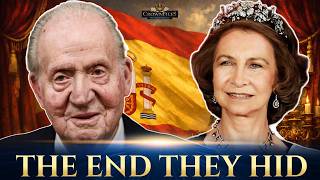
While Juan Carlos dominated headlines, the DARK SECRETS of QUEEN SOFIA reveal one of the most painful, elegant, and emotionally devastating stories in modern European royalty. Born a Greek princess, Sofía set aside her own royal claims to marry into the Spanish Bourbons. She bore five children and stood beside her husband through the triumphs and tragedies of Spain's democratic journey. Yet behind the polished surface of state visits and royal photographs, she endured a marriage marked by infidelity, political pressure, and the constant glare of public judgment. Her silence was both her strength and her burden.
Exile and Ab abdication
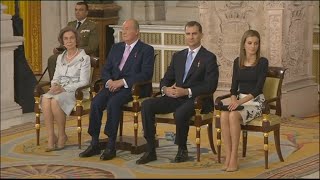
By December 2014, the accumulating scandals left Juan Carlos with no viable path forward. He announced his abdication in favor of his son, Felipe VI, citing health reasons but effectively acknowledging the unsustainable damage to the monarchy's reputation.
Almost immediately after stepping down, Juan Carlos left Spain for good. He settled in Abu Dhabi, United Arab Emirates, where he had previously purchased property and cultivated business connections. Speculation is rife over the whereabouts of the former king, though he has largely remained out of public view in recent years.
Legacy and Historical Assessment
Historians remain divided on how to judge Juan Carlos's reign. Supporters point to his crucial role in dismantling Franco's dictatorship and guiding Spain into modern democracy. Detractors argue that his later years — marked by perceived greed and moral compromise — tarnished a legacy that once inspired genuine admiration.
The controversy also forced Spain to confront uncomfortable questions about the role and privileges of its monarchy in the twenty-first century. King Felipe VI has made efforts to project transparency and sobriety, explicitly distancing himself from his father's conduct.
As Spain looks forward, the reign of Juan Carlos endures as a complex chapter — a reminder that even those who shape nations can falter under the demands of power, wealth, and human weakness.
```