Introduction
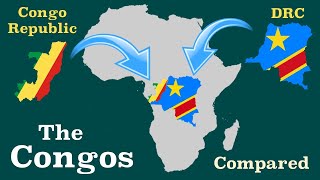
The term “Congo” can refer to two distinct African nations: the Republic of the Congo and the Democratic Republic of the Congo (DRC). Although they share a common river and colonial history, their identities, borders, and political realities diverge significantly. This article explores the key differences, historical context, and current affairs that set these two countries apart.
Historical Background
Both Congos were part of the Congo Basin, a region rich in natural resources and biodiversity. The Republic of the Congo, formerly French Congo, gained independence in 1960. The DRC, formerly Belgian Congo, also became independent in 1960 but has endured a more tumultuous post‑colonial period, including civil wars and foreign interventions.
- Republic of the Congo – French colonial rule, relatively stable political trajectory.
- DRC – Belgian colonial legacy, long-standing conflict zones such as the eastern provinces.
Geographic Distinctions
While both countries lie on the western side of the African continent, they differ in size and topography.
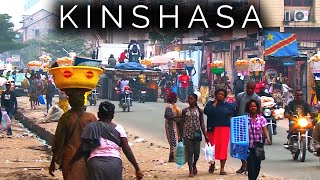
- Republic of the Congo – Covers ~342,000 km², features a coastal Atlantic shoreline, and its capital, Brazzaville, sits on the Congo River opposite Kinshasa.
- DRC – The second largest country in Africa at ~2.34 million km², home to the world’s largest rainforest and the Congo River’s source.
Political Systems
Each nation follows a distinct governmental structure.
- Republic of the Congo – A semi‑presidential republic with a history of single‑party dominance and a relatively short list of presidents.
- DRC – A presidential republic marked by frequent changes in leadership, ongoing security challenges, and a complex federal system.
Economic Profiles
Both economies rely heavily on natural resources, but the scale and diversification vary.
Republic of the Congo
The economy is dominated by oil production, accounting for a large portion of export revenue. Agriculture, forestry, and fishing also play important roles.
DRC
Despite vast mineral wealth—copper, cobalt, diamonds, and gold—the DRC struggles with infrastructure deficits and corruption. Mining remains the backbone of the economy, but revenue often fails to translate into widespread development.
Cultural Aspects
Languages, ethnic groups, and cultural expressions differ markedly.
- Republic of the Congo – Predominantly French-speaking, with over 20 ethnic groups such as the Kongo and Mbochi