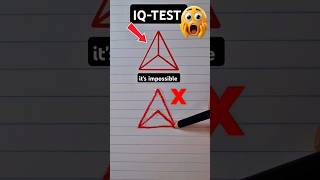
Trace Triangles: A Guide to Drawing Perfect Triangles by Hand
Whether you’re a student learning geometry, a designer sketching a logo, or a parent helping children practice basic shapes, knowing how to trace and draw triangles accurately is a fundamental skill. This article walks you through the essential methods for creating any triangle, including the special cases of isosceles and equilateral triangles. We’ll also touch on a fun “one‑line” puzzle that challenges even seasoned geometry lovers.
Why Mastering Triangle Tracing Matters
Triangles are the building blocks of many geometric constructions and everyday objects. Being able to draw a clean, precise triangle:
- Improves spatial reasoning.
- Sets a foundation for more complex shapes.
- Allows you to create accurate architectural or engineering drawings.
- Provides a simple yet engaging puzzle for children and adults alike.
How to Draw Any Triangle
To draw an arbitrary triangle, you only need a ruler and a pencil. Follow these steps:
- Choose Your Base: Place a straight line segment on your paper. The length will be the base of your triangle.
- Mark the Apex Point: Decide where the third vertex will be. Use a protractor to set the desired angles or simply place the point freely if the triangle is irregular.
- Connect the Vertices: Draw lines from the apex to each endpoint of the base. Ensure the lines are straight and meet at the apex.
- Check Proportions: If you need a specific shape, measure the sides with a ruler or a compass to confirm the lengths.
That’s it—a simple triangle ready for use in diagrams, art, or geometry problems.
How to Draw an Isosceles Triangle
An isosceles triangle has two equal sides. To trace one accurately, use the following method that guarantees symmetry:
- Draw the Base: Start with a horizontal line of any length.
- Place the Midpoint: Find the midpoint of the base by measuring half its length. Mark this point.
- Construct the Height: From the midpoint, draw a perpendicular line upward using a right‑angle template or a set square.
- Set the Vertex: Decide the height of the triangle. Measure this distance along the perpendicular line and mark the apex.
- Complete the Triangle: Connect the apex to both endpoints of the base.
Because the height is drawn from the midpoint, the two sides are guaranteed to be equal, giving you a perfect isosceles triangle.
How to Draw an Equilateral Triangle
An equilateral triangle has three equal sides and angles of 60°. A classic construction uses only a compass and a ruler:
- Draw a Base: Place a horizontal line segment of