Triangle Sum Theorem Activity
The Triangle Sum Theorem states that the sum of the interior angles of any triangle equals 180°. This fundamental fact is a cornerstone of Euclidean geometry and provides a simple yet powerful tool for solving a wide range of angle‑finding problems. In this article we explore how to bring the theorem to life with engaging activities, visual demonstrations, and practical practice exercises that can be used in the classroom or at home.
Understanding the Triangle Sum Theorem
At its core, the theorem is a statement about the geometry of triangles. Whether a triangle is acute, right, or obtuse, its interior angles always add up to one whole revolution minus the external angle, which is always 180°. This property holds true for every triangle, regardless of its shape or size.
- Acute triangles: all angles less than 90°
- Right triangles: one angle equals 90°
- Obtuse triangles: one angle greater than 90°
Because the theorem is universal, it can be used to solve for missing angles when two angles are known, or to check the validity of a set of angle measurements.
Visual Representation and Demonstration
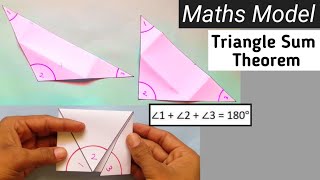
One of the most effective ways to understand the theorem is to see it in action. A simple visual demonstration can be created with a protractor and a paper triangle:
- Draw a triangle of any shape on a sheet of paper.
- Measure each interior angle with a protractor.
- Add the three measurements together.
- Confirm that the sum equals 180°.
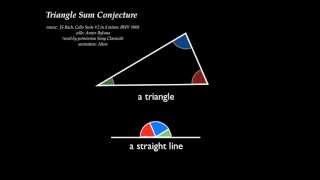
For a more dynamic approach, many educational platforms provide interactive videos that illustrate how the angles of a triangle are related. Watching a step‑by‑step video helps students see the theorem applied in real time, reinforcing the concept through visual and auditory cues.
Activity Ideas for Students
Below are several activities that can be used to practice the Triangle Sum Theorem. These activities range from hands‑on projects to digital quizzes, ensuring that learners of all styles can engage with the material.
- Angle Hunt: Students find and record the angles of various triangles in the classroom or in pictures. They then calculate the sum to verify the theorem.
- Construct and Measure: Using a ruler and protractor, students draw triangles with one or two angles predetermined. They must calculate the third angle and then verify their answer.
- Digital Scavenger Hunt: Online platforms provide interactive triangles where students can drag and adjust angles. The software instantly displays the sum of the angles.
- Real‑World Application: Students analyze architectural drawings or engineering schematics to find triangles and confirm that their angles sum to 180°.
Step‑by‑Step Practice Problems
Here are a few practice problems that incorporate the Triangle Sum Theorem. Work through each problem, and then check your answers with the solutions provided.
- Problem 1: