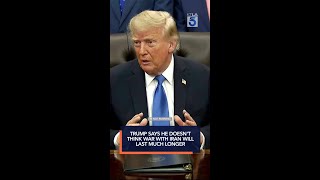
Trump Talks About Iran Deal: Recent Remarks and Historical Context
Former President Donald J. Trump resurfaced the topic of the Iran nuclear agreement during a press briefing at Palm Beach International Airport in Florida on Sunday morning. While no new policy was announced, the remarks sparked renewed discussion about the United States’ long‑standing stance toward Tehran and the future of diplomatic engagement in the Middle East. This article examines the background of the 2015 Joint Comprehensive Plan of Action (JCPOA), Trump’s earlier positions, the specific comments he made on Sunday, and the potential implications for U.S. foreign policy.
Background of the 2015 Iran Nuclear Agreement
The JCPOA, commonly referred to as the Iran nuclear deal, was reached in July 2015 between Iran and the P5+1 group of world powers – the United States, United Kingdom, France, Germany, Russia, and China – along with the European Union. Under the agreement, Iran agreed to limit its uranium enrichment activities, submit to extensive inspections by the International Atomic Energy Agency (IAEA), and allow monitoring of its nuclear facilities in exchange for relief from economic sanctions.
The deal was hailed by many diplomats as a diplomatic breakthrough that reduced the risk of a nuclear‑armed Iran. Critics, however, argued that the restrictions were insufficient and that the sunset provisions would eventually allow Iran to resume more advanced nuclear work.
Trump’s Previous Position on the Deal
During his 2016 campaign, Donald Trump repeatedly described the JCPOA as a “disaster” and promised to renegotiate or abandon it. After taking office in January 2017, his administration formally withdrew the United States from the agreement in May 2018, re‑imposing a “maximum pressure” sanctions regime aimed at curtailing Iran’s nuclear program and its regional activities. The withdrawal was supported by the Trump‑appointed Secretary of State, Mike Pompeo, and the National Security Adviser, John Bolton, who argued that the deal failed to address Iran’s ballistic‑missile development and its support for militant groups.