Ulysses (1954) – Overview
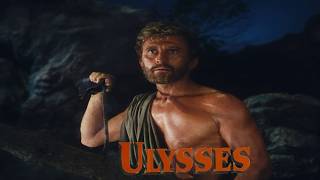
The 1954 film Ulysses is an Italian‑French co‑production that brings Homer’s epicThe Odyssey to the screen. Directed by Mario Camerini, it stars Kirk Douglas as the titular hero, Silvana Mangano as Penelope, and Anthony Quinn as the cyclops Polyphemus. The movie blends mythic adventure with the grandiose style typical of mid‑century epics.
Plot Summary
The story follows King Ulysses of Ithaca as he struggles to return home after the Trojan War. After offending Poseidon, Ulysses faces a series of trials: the Lotus‑eaters, the Cyclops’ cave, the enchantress Circe, the Sirens, Scylla and Charybdis, and finally the wrath of the suitors who have taken over his palace. Throughout, his cunning and loyalty to his wife Penelope guide him toward reunion with his son Telemachus.
Production Background
Filmed primarily at the Cinecittà studios in Rome, the production utilized extensive sets to recreate ancient Mediterranean landscapes. Mario Camerini, known for his work on historical dramas, aimed to balance spectacle with character depth. Kirk Douglas, fresh from successes in Champion and The Bad and the Beautiful, took on the physically demanding role after expressing interest in mythic stories. Silvana Mangano, already noted for her performance in Bitter Rice, portrayed Penelope with a restrained grace. Anthony Quinn’s portrayal of Polyphemus relied on makeup and forced perspective to create the imposing Cyclops.
Reception at Release
Upon its premiere in Italy and subsequent distribution in the United States, Ulysses received mixed reviews. Critics praised the film’s visual ambition and Douglas’s energetic performance, while some noted that the screenplay condensed Homer’s lengthy narrative, resulting in occasional pacing issues. The film holds an IMDb rating of 6.6/10, reflecting a modest but enduring audience appreciation.
Legacy and Influence
Although not as widely remembered as later epics such as Ben‑Hur (1959) or Spartacus (1960),Ulysses contributed to the postwar wave of mythological films


![[Filme] Ulysses - 1954 - Dublado BR](https://i.ytimg.com/vi/HFxRJu9N0EM/mqdefault.jpg)


