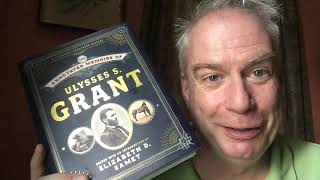
Exploring the Legacy of the Ulysses S. Grant Book
When searching for a Ulysses S. Grant book, readers typically find themselves at a crossroads between two distinct types of literature: the intimate, first-person accounts found in his personal memoirs and the comprehensive analyses provided by modern historical biographies. Ulysses S. Grant, the Commanding General of the Union Army and the 18th President of the United States, left behind a literary legacy that is as strategically precise as his military campaigns.
The Significance of Grant’s Personal Memoirs
Among the vast collection of literature regarding the Civil War, The Personal Memoirs of U.S. Grant stands as one of the most revered autobiographies in American history. Written while Grant was dying of throat cancer, the book was a race against time to ensure his family's financial security and to set the historical record straight.
What makes Grant's personal writing unique is its lack of pretension. Unlike many political figures of his era, Grant wrote in a clear, direct, and honest style. He avoided flowery language, focusing instead on the logistical realities of war and the difficult decisions required to preserve the Union. For those seeking an authentic voice, the Ulysses S. Grant book experience begins with these memoirs.
Annotated Editions and Deep Dives
For the serious historian or the dedicated collector, standard editions of the memoirs may not be enough. This has led to the rise of Grant’s Annotated Memoirs. These versions are essential for readers who want to understand the context behind Grant's assertions. Annotated editions provide:
- Contextual Clarifications: Explanations of military terminology and 19th-century political jargon.
- Fact-Checking: Cross-references with other generals' journals to verify the timeline of events.
- Biographical Notes: Detailed backgrounds on the secondary figures mentioned in the text.
Exploring an annotated volume transforms the reading experience from a simple narrative into a comprehensive study of the American Civil War.
Biographies vs. Memoirs: Which Should You Read?
Choosing the right Ulysses S. Grant book depends largely on what the reader hopes to achieve. There is a fundamental difference between reading Grant's own words and reading a historical biography of the man.
The Memoir Perspective
Reading the memoirs allows you to step into Grant's mind. You see his humility, his strategic patience, and his internal struggles. It is an exercise in understanding the why behind the actions of the Union's most successful general.
The Biographical Perspective
A historical biography provides the objectivity that a memoir lacks. Biographers can analyze Grant's presidency, his struggles with finance, and his relationship with the political machine of the time from a distance. A biography can synthesize thousands of documents to provide a holistic view of Grant's impact on Reconstruction and civil rights.
Collecting and Experiencing Grant's Works
In recent years, there has been a resurgence of interest in Grant's writings, fueled by both academic reappraisals and digital content. From library tours showcasing rare first editions to soft-spoken reviews and deep-dive analyses, the way we consume the history of Ulysses S. Grant has evolved.
For those looking to start their collection, it is recommended to follow a specific order of reading:
- Start with the Personal Memoirs: Establish a baseline understanding of Grant's voice and perspective.
- Move to a Modern Biography: Gain an objective view of his political and military failures and successes.
- Explore Annotated Versions: Dive into the granular details of specific battles and political maneuvers.
Conclusion
Whether you are interested in military strategy, presidential history, or the sheer willpower of a man fighting a terminal illness to finish his life's work, a Ulysses S. Grant book offers invaluable insights. From the raw honesty of his