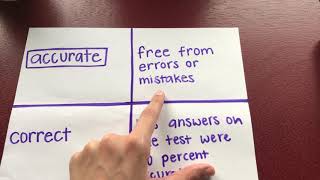
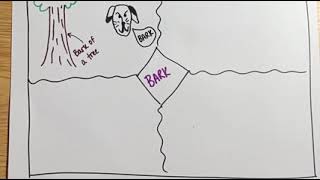
Vocabulary Four Square Graphic Organizer: A Practical Tool for Language Learning
The Four Square Vocabulary Graphic Organizer is a versatile, student‑centered strategy that helps learners build deeper understanding of new words. By placing a word in the center of a four‑sectioned square, students can record a definition, synonyms, antonyms, and an example sentence. This structure encourages active engagement, promotes retention, and supports multiple learning styles.
Why Teachers Love Four Square Maps
In classrooms ranging from elementary to college, teachers use the Four Square model to:
- Clarify multiple meanings of a word
- Connect vocabulary to personal experiences
- Facilitate peer discussion and collaboration
- Provide a visual summary that students can review independently
- Integrate seamlessly with other strategies such as the Frayer Model or MWMS 4
How to Use a Four Square Vocabulary Organizer
Follow these steps to create a productive activity for your students.
- Choose a Focus Word – Select a term that aligns with the current lesson or reading passage. It can be a challenging term, a new concept, or a word that students frequently misinterpret.
- Draw the Four Squares – On a sheet or whiteboard, divide a large square into four equal quadrants. Label them: Definition, Synonyms, Antonyms, Example.
- Introduce the Word – Read the word aloud, provide its pronunciation, and give a brief context. Encourage students to think of any prior knowledge related to the term.
- Fill the Quadrants – Guide students to write:
- Definition: A concise, accurate description.
- Synonyms: 2–3 words that convey a similar meaning.
- Antonyms: 2–3 words that express the opposite.
- Example: A sentence using the word in a meaningful way.
- Review and Discuss – Circulate the class, ask students to explain their choices, and correct misunderstandings. Peer feedback often uncovers alternative synonyms or richer examples.
- Extend the Activity – Assign the completed four square to a journal, use it for a quiz, or incorporate it into a digital learning platform.
Integrating the Frayer Model with Four Squares
The Frayer Model is another graphic organizer that focuses on definition, characteristics, examples, and non‑examples. When combined with the Four Square approach, teachers can create a hybrid model that offers deeper semantic exploration:
- Use the Definition quadrant of the Four Square to capture the Frayer definition.
- Replace Synonyms with Characteristics and Antonyms with Non‑examples.
- Keep the Example quadrant unchanged.
This adaptation is especially useful in advanced courses such as EDUC 556, where students analyze complex terminology.
Four Square in the Context of MWMS 4
MWMS