Who Is the Current King of Spain? A Look at Felipe VI and His Modern Monarchy
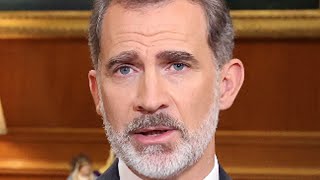
The Spanish throne has survived wars, exiles, and dictators, emerging today under the reign of King Felipe VI. Ascending in 2014 after the abdication of his father, Juan Carlos I, Felipe VI faces the challenge of restoring public confidence while honoring a lineage that stretches back to the Catholic Monarchs of 1469. This article examines his background, the low‑key coronation, the family’s wealth, and the broader historical context that shapes the Spanish monarchy today.
Early Life and Education
Felipe VI was born on 30 January 1968 in Madrid, the eldest son of King Juan Carlos I and Queen Sofía. His upbringing combined traditional royal duties with a modern education:
- Academic studies: He earned a law degree from the Universidad Autónoma de Madrid and later completed a Master’s in International Relations at Georgetown University.
- Military training: Felipe attended the Spanish Army’s Infantry Academy, the Naval Academy, and the Air Force Academy, eventually attaining the rank of Captain General, the highest military rank in Spain.
- Public service: Before becoming king, he represented Spain on numerous diplomatic missions and chaired the Spanish Olympic Committee.
The Path to the Throne
Juan Carlos I became king in 1975, appointed by the late dictator Francisco Franco as the successor to a regime that had suppressed the monarchy for decades. Juan Carlos I oversaw Spain’s transition to democracy, but later scandals—particularly allegations of financial impropriety and a high‑profile hunting incident—eroded his popularity. In June 2014, he announced his abdication, paving the way for Felipe VI to assume the crown.
A Low‑Key Coronation
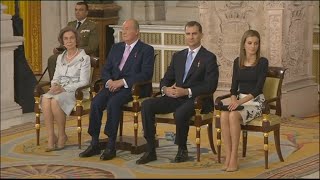
Unlike the lavish ceremonies of earlier centuries, Felipe VI’s accession ceremony was deliberately modest. Held on 19 June 2014 at the Royal Palace of Madrid, the event featured:
- A simple oath before the Cortes Generales (Spain’s parliament) rather than a grand coronation mass.
- Attendance limited to Spanish officials, members of the royal family, and a few foreign dignitaries.
- Emphasis on transparency, with the king publicly acknowledging the need for a “new era of openness.”
The restrained approach was intended to distance the new reign from the scandals that had plagued his father’s later years.
Complicated Lineage: A Distant Cousin of Queen Elizabeth II
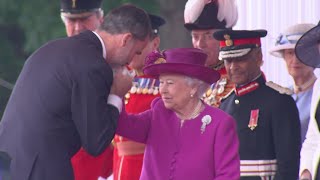
European royal families are interwoven through centuries of dynastic marriages. Felipe VI is a descendant of Queen Victoria of the United Kingdom through his great‑grandmother, Princess Victoria Eugenie of Battenberg, who married King Alfonso XIII. This makes Felipe VI a distant cousin of the late Queen Elizabeth II. The shared ancestry underscores the intricate network of relationships that link Spain’s Bourbon line to the British royal house.
Wealth and Financial Transparency
The Spanish royal household manages a portfolio that includes historic palaces, art collections, and agricultural lands. Estimates of the family’s net assets vary, but public reports suggest a value in the range of €1.5 – €2 billion. Key points about the finances include:
- Public funding: The “Presupuesto de la Casa Real” allocates a modest annual budget for official duties, staff salaries, and maintenance of royal residences.
- Private assets: The family holds private estates such as the Marivent Palace in Mallorca and the Pazo de la Reina in Galicia.
- Transparency measures: Since 2014, the royal household publishes detailed annual accounts, and Felipe VI has pledged to reduce private wealth that could be perceived as conflicting with public service.
Scandals and Drama: From Financial Fraud to Public Scrutiny
The Spanish monarchy has not been immune to controversy. Notable incidents include:
- Financial fraud allegations involving former King Juan Carlos I’s offshore accounts, which prompted investigations by Spanish authorities.
- “Shooting oneself in the foot” moments such as the 2012 elephant hunting episode that sparked public outrage and intensified calls for accountability.
- Corruption probes linked to the former queen’s alleged involvement in a luxury‑gift scandal, further eroding trust.
These events have contributed to a perception that the royal family’s drama rivals that of any popular television series, prompting both criticism and fascination among the Spanish public.
Modernizing the Monarchy
Felipe VI has taken several steps to align the institution with contemporary democratic values:
- Constitutional commitment: He repeatedly affirms that the monarchy is “a symbol of unity and continuity” under the 1978 Constitution.
- Digital outreach: The royal household maintains active social‑media channels, providing real‑time updates on official engagements.
- Gender equality: In 2021, Felipe VI announced that Princess Leonor, his eldest child, would be formally recognized as the heir presumptive, reinforcing the principle of equal succession.
Princess Leonor: The Heir Apparent
Born on 31 October 2005, Princess Leonor de Borbón y Ortiz is the first in line to the throne. She has been preparing for her future role through:
- Studying at the United World College of the Atlantic in Wales, where she follows a bilingual curriculum.
- Participating in official ceremonies, such as the 2023 opening of the Spanish Parliament.
- Receiving military training, mirroring the preparation of her father.
Leonor’s public profile is carefully managed to balance tradition with the expectations of a modern constitutional monarchy.
The Spanish Royal Family in Historical Perspective
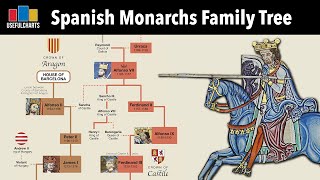
From the union of Ferdinand II of Aragon and Isabella I of Castile in 1469 to today’s constitutional monarchy, the Spanish royal family has endured:
- Dynastic shifts: The transition from the Habsburgs to the Bourbons in the early 18th century.
- Republican interludes: Two periods (1873‑1874 and 1931‑1939) when Spain was a republic.
- Francoist rule: The dictatorship (1939‑1975) that kept the throne vacant until Juan Carlos I’s restoration.
Each era left a legacy that shapes the expectations placed on Felipe VI and his successors.
Conclusion: A Monarch for a New Spain
King Felipe VI stands at the crossroads of tradition and reform. His low‑key coronation, commitment to financial transparency, and efforts to modernize royal duties aim to restore credibility after a series of high‑profile scandals. While the monarchy’s wealth and historic lineage—linking him to Queen Elizabeth II—remain points of public interest, Felipe VI’s focus on constitutional limits and public service defines his reign.
As Spain looks ahead, the future of the crown will depend on how well the royal family balances its storied past with the demands of a 21st‑century democracy, and on whether Princess Leonor can continue the path of modernization set by her father.