Xbox Series S Vs Xbox Series X: A Detailed Comparison
The Xbox Series S and Xbox Series X are Microsoft’s two fourth‑generation consoles released in 2020. Both run the same operating system, support the same game library, and share many core features, yet they target different audiences. This article breaks down the most important factors—design, performance, graphics, storage, price, and overall value—so you can decide which console fits your gaming setup.
Design and Build
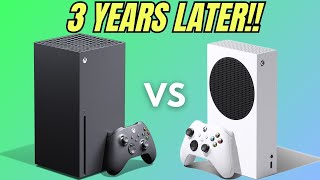
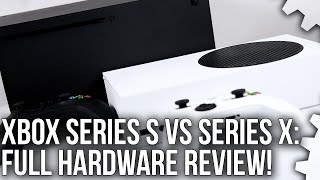
Both consoles have a minimalist rectangular shape, but the Series X is noticeably larger and heavier.
- Xbox Series X: Dimensions = 15.1 cm × 15.1 cm × 30.1 cm; weight ≈ 9.8 lb. The tower‑like design resembles a mini‑PC and includes a built‑in 4K‑ready HDMI 2.1 port.
- Xbox Series S: Dimensions = 10.1 cm × 10.1 cm × 26.5 cm; weight ≈ 4.25 lb. The slimmer profile makes it easier to place in cramped entertainment centers.
Both models feature a quiet fan and a detachable power supply, but the Series X’s larger heatsink allows for higher sustained performance under load.
Performance and CPU
At the heart of each console is a custom AMD Zen 2 CPU, but the clock speeds differ.
- Series X: 8 cores @ 3.8 GHz (3.6 GHz with SMT) – delivers the highest processing power in the current console generation.
- Series S: 8 cores @ 3.6 GHz (3.4 GHz with SMT) – still very capable, but about 5‑6 % slower in raw CPU tasks.
Both consoles share a Radeon RDNA 2 GPU, yet the Series X’s 12 TFLOPs of shader throughput outpaces the Series S’s 4 TFLOPs. In practice, the X can maintain 4K gaming at 60 fps with ray tracing, while the S targets 1440p resolution and upscales to 4K.
Graphics, Resolution, and Ray Tracing
Graphics quality is the most visible difference between the two models.
- Resolution: